
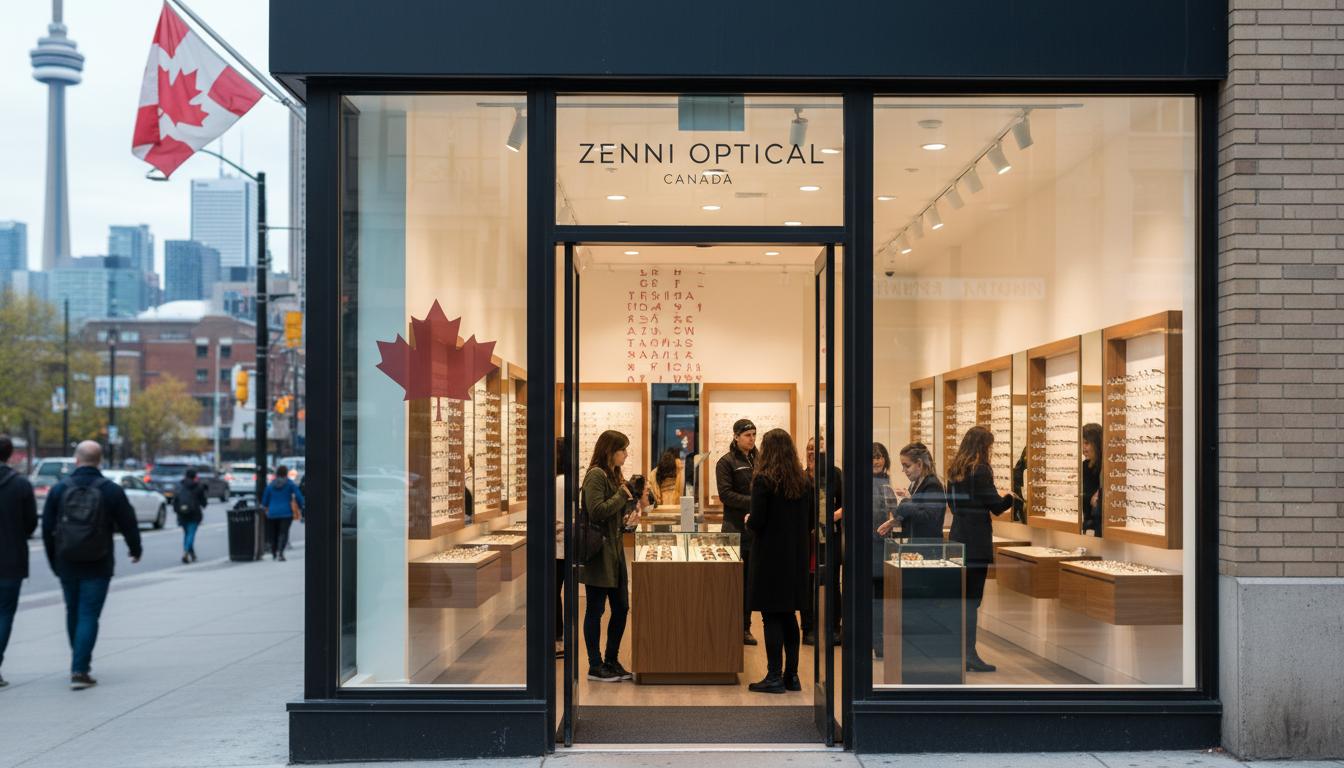
If you’ve been eyeing those budget-friendly frames and wondering whether Zenni makes sense in Canada, you’re not alone. Between high prices in brick-and-mortar shops and the convenience of online shopping, a lot of Canadians are typing “zenni canada” into their search bars. This guide walks you through everything that matters before you click “buy”: how cross-border shipping works, what duties and taxes to expect, how to read your prescription, how to measure pupillary distance, what lens options actually mean, and how to claim costs back from your Canadian benefits plan. You’ll get clear, practical steps and Canada-specific tips so you can order with confidence—and without nasty surprises.
What Is Zenni—and Why Canadians Care
Zenni (often called Zenni Optical) is a U.S.-based online eyewear retailer best known for low prices, a huge catalogue of frames, and quick ordering. For many Canadians, the appeal is simple: a backup pair for the car, a pair for cycling or skiing, prescription sunglasses for summer by the lake, blue-light blockers for work—without the sticker shock that can come with traditional options.
While there isn’t a separate “Zenni Canada” company, the site ships to Canada and offers most of the same products as in the U.S. You’ll find single-vision and progressive lenses, prescription sunglasses, kids’ frames, and specialized tints. The big question isn’t “Can I order to Canada?”—you can. It’s “What will the real cost and experience look like once currency, taxes, and import rules kick in?” That’s what we’ll unpack next.
Is Zenni Available in Canada? Shipping, Currency, and What to Expect
Short answer: yes. Zenni ships to Canadian addresses, including PO boxes and rural routes, though exact carriers and timelines can vary by order and location. Most Canadians will see pricing in U.S. dollars unless they switch currency display (if available) on the site; even then, billing often processes in USD. That matters because your bank or card issuer converts amounts to CAD and may add a foreign transaction fee. If you use a no-foreign-fee credit card or PayPal with a favourable conversion, you can trim a few dollars off the final tally.
Typical delivery includes a manufacturing period (lenses are cut and installed) followed by international transit. Expect a few business days to make the glasses and another span for cross-border travel and customs clearance. Weather, holidays, and border volume can add a couple of days—especially around November–January. Tracking usually updates when the parcel is handed off to the next carrier and again when customs processing finishes.
Customs, Duties, and Taxes for Canadian Orders
Here’s where many first-time buyers get surprised. Canada Border Services Agency (CBSA) can assess goods entering the country, even when they’re just a pair of eyeglasses. Duties and taxes depend on shipment value, origin, carrier type, and classification. In practice, many Zenni orders are low-value personal imports, which helps—but “low-value” doesn’t always mean “no tax.”
Two thresholds matter for Canadians buying cross-border online:
- Postal shipments (e.g., USPS handed to Canada Post): Canada’s de minimis threshold is typically low. If assessed, GST/HST (and, in non-HST provinces, PST or QST) can be applied. Canada Post charges a modest handling fee if they collect tax on delivery.
- Courier/express shipments (e.g., private couriers): Under trade rules, Canada provides limited relief for low-value shipments via couriers: duty relief up to a certain value and tax relief up to a smaller threshold. Above those levels, taxes apply. Brokerage fees can be higher with couriers, though some carriers include them in shipping.
The rules are nuanced, but here’s a simplified snapshot to help you estimate. Always remember: taxes apply to the item value plus shipping, converted to CAD at the exchange rate CBSA uses for assessment.
| Scenario | Likely Outcome | Notes |
|---|---|---|
| Small order shipped via postal network | Possible GST/HST (and PST/QST, where applicable) on delivery | If assessed, Canada Post charges a handling fee when collecting tax. Sometimes small parcels clear without assessment, but don’t count on it. |
| Courier shipment under low-value thresholds | Limited relief may apply; GST/HST still common above a smaller threshold | Brokerage fees can vary by courier and service level. Check fine print before choosing faster shipping. |
| Higher-value order | Expect GST/HST (and potentially PST/QST) | Duties on eyewear may be low or zero depending on classification and origin, but taxes commonly apply. |
Bottom line: budget for tax. If you don’t get charged, that’s a pleasant surprise—not a guarantee to plan around.
How Much Will a Pair Really Cost in CAD?
The sticker price on Zenni can be impressively low, but your final out-of-pocket in Canada includes several moving parts:
- Frame price (in USD)
- Lens type and index upgrades (in USD)
- Coatings and tints (in USD)
- Shipping (in USD)
- Currency conversion to CAD (bank rate + any card fees)
- GST/HST (and possibly PST/QST), plus any handling/brokerage
Want a quick way to ballpark it? Multiply your Zenni cart total by the current USD-to-CAD exchange. Add 5–15% for GST/HST depending on province (more on provincial rates below). If the parcel arrives tax-free, great—you’re under budget. If not, you already planned for it.
Example estimation: Suppose your Zenni cart totals USD $45 for frame and single-vision lenses, plus USD $10 shipping = USD $55. Using an example exchange of 1.35, that’s about CAD $74.25 before tax. If you’re in Ontario (13% HST), plan for roughly CAD $9.65 in tax, bringing it to about CAD $83.90. Add a potential postal handling fee if applicable. Your real cost lands close to this number.
Prescription Rules in Canada: What You Need Before You Order
To buy prescription eyeglasses from any retailer, you need a current prescription. In Canada, prescription expiry norms vary by province and age, and your optometrist’s advice takes precedence based on your eye health. As a general pattern, many adults renew every one to two years. Children’s prescriptions often change more rapidly. Provinces regulate what must appear on a prescription (for example, patient name, sphere/cylinder/axis, any prism, add power for reading, prescriber’s info, and expiration date).
Online retailers typically ask you to input the prescription values and may require a photo or upload of your Rx. Keep your original handy. If the prescription is outdated, you may still be able to place an order on some sites, but from an eye-health standpoint, it’s worth getting an up-to-date exam. In Ontario, for example, routine eye exams are covered by OHIP for those under 20 and for many people aged 65+ under certain conditions; coverage for ages 20–64 is limited to specific medical conditions. Other provinces have their own rules and coverage details—check your provincial plan.
How to Read Your Prescription (and What Each Part Means)
Most Canadian prescriptions use familiar abbreviations:
- OD and OS: OD is right eye (oculus dexter); OS is left eye (oculus sinister). Sometimes you’ll see OU (both eyes).
- SPH (Sphere): Your main nearsighted or farsighted correction. Negative numbers for myopia (e.g., -2.00), positive for hyperopia (e.g., +1.50).
- CYL (Cylinder) and AXIS: Astigmatism correction and orientation. Cylinder might be in minus or plus format depending on prescriber. Online retailers allow entry in minus cylinder; some can convert plus-cylinder automatically.
- ADD: Bifocal/progressive addition power for reading or intermediate zones. Commonly +0.75 to +3.00.
- Prism/Base: Prism correction for eye alignment; not all online labs can fill every prism amount. Check retailer limits.
- PD: Pupillary Distance. Often not printed on the Rx in Canada because many optometrists consider it a dispensing measurement rather than a diagnostic value.
If your Rx is unusual (high astigmatism, strong prism, anisometropia, or a very high sphere), ask your optometrist whether an online order is sensible for you. Complex prescriptions can be filled online, but tiny fitting errors become more noticeable with higher powers.
Pupillary Distance (PD): How Canadians Can Measure It Accurately
In many provinces, PD is not legally required to be on the prescription and may be treated as a dispensing measurement. That means your optometrist’s office might not include it automatically. Your options:
- Ask your optician or optometrist to measure PD. Some will do it as a courtesy; others may charge a small fee, especially if you indicate you’re ordering online.
- Use a smartphone or desktop tool offered by the retailer. Follow instructions carefully: good lighting, remove hats, hold still, and ensure the scale reference is correct.
- Measure manually with a millimetre ruler and a helper. Take multiple readings and average them. If you need progressives, you ideally want monocular PDs (right and left separately), not just a single binocular PD.
Tip: If you’re ordering progressives or have a higher prescription, prioritize accuracy. A 1–2 mm PD error can be noticeable in strong prescriptions or multifocals.
Choosing Frames Online: Sizing, Materials, and Fit
Frames are labelled with three key numbers, usually printed on the inside temple: lens width (eye size), bridge width, and temple length. For example: 52–18–140. Matching these to a pair you already like is the fastest way to find a comfortable fit online.
Consider these fit factors when browsing Zenni frames from Canada:
- Lens width and height: Wider or taller lenses weigh more and may need a higher-index lens to keep weight down in strong prescriptions.
- Bridge type: Adjustable nose pads suit many nose shapes and help with winter and summer changes (sweat, sunscreen). Keyhole bridges on acetate work well for some faces but offer less adjustability.
- Temple length: 135–145 mm is common. If you have a larger head or wear toques/earmuffs regularly, err slightly longer to avoid pressure points.
- Material: Acetate is sturdy and polishable. TR90 and nylon blends are lightweight and flexible (great for kids). Metal and titanium are slimmer and lighter; stainless steel is durable. For sports or winter use, look for grippy temple tips.
Virtual try-on tools help, but lighting and camera angle can trick the eye. When in doubt, compare frame measurements against a pair you already own, and pay attention to the lens height if you’re planning progressives—most labs need enough vertical room for the reading zone.
Lens Options Explained for a Canadian Context
Lenses can be the most confusing (and most important) part of ordering online. Here’s how to think through lens index, durability, and upgrades with Canadian life in mind—driving at dusk, skiing in Banff, or staring at Excel during long winter afternoons.
| Lens Index/Material | Best For | Pros | Trade-offs |
|---|---|---|---|
| 1.50 (standard plastic) | Low prescriptions (under +/-2.00), budget pairs | Inexpensive, decent optics | Thicker/heavier at higher powers; not impact-resistant |
| Polycarbonate (~1.59) | Kids, sports, safety-conscious users | Impact-resistant, light, built-in UV | Can have more chromatic aberration vs higher-index |
| 1.61 (mid-high index) | Moderate prescriptions (+/-2.00 to +/-4.00) | Thinner than 1.50, good balance of optics and cost | Costs more than standard/plastic |
| 1.67 (high index) | Higher prescriptions (+/-4.00 to +/-6.00) | Much thinner, lighter | More reflections—get good anti-reflective coating |
| 1.74 (ultra high index) | Very high prescriptions (+/-6.00 and up) | Thinnest profile | Highest cost; AR coating is essential for clarity |
Coatings and treatments to consider:
- Anti-reflective (AR): Essential for night driving, office work, and higher-index lenses. Reduces halos and improves contrast.
- Scratch-resistant hard coat: Most modern lenses include this by default; still treat lenses gently.
- Hydrophobic/oleophobic: Helps repel rain, snowmelt spray, facial oils, and salt from ocean mist. Makes cleaning easier in Canadian winters.
- Photochromic: Darkens outdoors, clear indoors. Cold weather can make photochromic lenses respond quickly outdoors, but they remain slightly tinted in cars since most windshields block UV.
- Polarized sunglasses: Crucial for glare off snow, water, and wet roads. Great for summer fishing in Muskoka or winter driving after a snowfall.
What about blue-light filtering? Evidence to date does not strongly support blue-light lenses for eye strain or sleep improvement for most people. Dryness and fatigue from screens are more about blink rate and ergonomics than blue wavelengths. If blue-light tinting makes screens more comfortable for you, go for it—but don’t feel obligated.
Progressives and Bifocals Online: When It Works—and When to Go Local
Progressives depend on precise fitting height and accurate monocular PDs. Many Canadians do fine ordering them online, especially if the prescription is moderate and the frame has adequate lens height (usually 30 mm or more is safer). Virtual try-on plus careful PD measurement can get you close.
Situations where a local optician may be the safer bet:
- Strong prescriptions with high cylinder or prism
- Unique facial anatomy that needs custom adjustments
- Past trouble adapting to progressives
- Occupational progressives for multi-screen setups requiring fine-tuned intermediate zones
If you try progressives online, choose a frame with adjustable nose pads, avoid extreme wraparound shapes, and order a mid-height lens to give the lab room to place distance, intermediate, and near zones. Be prepared for a short adaptation period. If they don’t click after a couple of weeks of real-world use, look into the seller’s remake or return options.
Shipping to Canada: Timelines, Tracking, and Problem-Solving
Expect two phases: production and shipping. Production is usually a few business days, longer for progressives or specialty lenses. Shipping time varies by method, distance, and customs clearance. Urban centres like Toronto, Vancouver, Montreal, and Calgary typically see faster delivery than remote or Northern addresses, where weather and routing can add days.
Tracking tips:
- Watch for a handoff update when the parcel crosses the border or changes carriers.
- If Canada Post is the final-mile carrier, use the domestic tracking number once it appears; sometimes it differs from the original international number.
- Community mailboxes and parcel lockers are common—check the usual bin for delivery slips.
- Rural addresses and PO boxes generally work fine with postal shipping; couriers may require a street address.
If a parcel is stuck in customs longer than expected, it often clears on its own within a few business days. If tracking stalls for more than two weeks, contact the retailer for a trace. Keep all order emails and tracking IDs until you have the glasses in hand.
Returns, Warranties, and Aftercare from Canada
Zenni’s policies can evolve, so read the current terms on their website before ordering. Historically, the company has offered a limited window to request a return or remake, with options that may include a partial refund or store credit. Return shipping to the U.S. is usually your responsibility, and international postage with tracking can run a bit more than a domestic letter—plan for that.
Useful Canadian aftercare tips:
- Local adjustments: Many Canadian optical shops will adjust frames you purchased elsewhere for a small fee. Expect to pay for this service; it’s normal.
- Nose pad swaps and minor fixes: Keep a tiny eyeglass screwdriver at home; winter/spring wardrobe changes can loosen screws. Replacing worn nose pads is cheap and can rescue a slipping frame.
- Warranty claims: If coatings peel or a lens defect shows up early, contact the seller right away. Provide photos and your order number. Policies often cover manufacturing defects within a defined period.
Paying for Glasses: Insurance, Benefits, and Taxes in Canada
Employer benefits are common in Canada, and most plans reimburse online eyewear with proper documentation. Typical steps:
- Keep the itemized receipt showing frame, lenses, coatings, and total paid. Ensure your full name is on it.
- Submit the claim through your insurer’s portal (e.g., Sun Life, Manulife, Canada Life, Green Shield). If asked for a provider or license number, upload the retailer’s invoice and a copy of your prescription.
- If your plan requires a “dispensing provider,” note that many insurers accept online retailers for reimbursement, but rules vary by plan. If in doubt, call your insurer before ordering.
If you have a Health Spending Account (HSA) through your employer, prescription eyewear typically qualifies. Save digital and paper copies of all documents. If you don’t have benefits, or if you exceeded your allowance this year, you may be able to claim out-of-pocket prescription eyewear under the federal Medical Expense Tax Credit, subject to CRA rules and thresholds. Only the portion not reimbursed by insurance is eligible. Keep receipts for at least six years in case of review.
Sales Tax Basics by Province and Territory
When CBSA assesses taxes on imports, they apply GST/HST federally and, in some provinces, PST or QST. Here’s a quick reference for consumer tax rates that commonly come into play with imported goods. Rates can change; verify if you’re budgeting for a large order.
| Province/Territory | Tax Structure | Total Rate |
|---|---|---|
| Alberta | GST | 5% |
| British Columbia | GST + PST | 5% + 7% = 12% |
| Manitoba | GST + PST | 5% + 7% = 12% |
| New Brunswick | HST | 15% |
| Newfoundland and Labrador | HST | 15% |
| Nova Scotia | HST | 15% |
| Ontario | HST | 13% |
| Prince Edward Island | HST | 15% |
| Quebec | GST + QST | 5% + 9.975% = 14.975% |
| Saskatchewan | GST + PST | 5% + 6% = 11% |
| Northwest Territories | GST | 5% |
| Nunavut | GST | 5% |
| Yukon | GST | 5% |
Remember: the tax is calculated on the Canadian-dollar value of your order, including shipping, and sometimes includes any applicable duties or handling fees in the base used for tax.
Comparing Zenni Canada vs. Alternatives
It’s smart to compare. Zenni Optical Canada searches often turn up competitors too—some domestic, some international. Here’s how to think it through:
- Local opticians and optometrists: Highest service and aftercare (adjustments, refits, coatings remakes), fastest problem resolution, and hands-on fittings. Prices are often higher, but you’re paying for expertise and speed when something needs fixing.
- Costco Optical (Canada): Competitive pricing on lenses and frames, decent service, simple returns in-store. Limited frame styles compared to giant online catalogues. Membership required.
- Clearly/Coastal (Canada-based): Frequent promos, Canadian shipping and returns, and easy insurance claims. Prices vary widely depending on promotion and lens package.
- Warby Parker (Canadian stores and online): Mid-range pricing, home try-on kits, strong styling, and brick-and-mortar support in major cities.
Who tends to win on raw price for a basic single-vision pair? Cross-border mass-market sites like Zenni often do. Who wins if you need progressive-lens troubleshooting, quick adjustments, or you’re tough to fit? Usually a Canadian optical professional. Many Canadians mix approaches—order an inexpensive “backup” or prescription sunglasses online, and get a primary progressive pair locally with in-person measurements.
Safety Eyewear, Kids’ Glasses, and Special Use Cases
Buying eyewear online for specialized needs takes extra care:
- Safety eyewear: If your workplace mandates CSA Z94.3-compliant safety glasses, verify that the frames and lenses you buy meet that Canadian standard and are appropriately marked. Not all “safety-style” frames sold online are certified for industrial use.
- Kids’ glasses: Look for flexible materials (TR90 or nylon blends), spring hinges, soft nose pads, and optionally a strap. Children’s PDs and segment heights change—measure carefully and revisit frequently.
- Sports and outdoor: For skiing, skating on the Rideau, or kayaking on the coast, consider polarized sunglasses, mirror coatings for bright days, and snug temples. Avoid extreme wrap unless the retailer can compensate for wrap-induced prism.
- Driving: Anti-reflective coatings help at dusk and in winter glare. Photochromics are convenient, but a dedicated polarized pair beats them in bright, snowy sun.
Privacy, Security, and Consumer Rights When Buying Cross-Border
Ordering from a U.S.-based retailer means your personal information is processed and stored outside Canada. That’s common with e-commerce, but it’s worth a thought if your workplace has data-handling rules. Canadian privacy law (PIPEDA) sets expectations for consent and safeguarding; U.S.-based companies typically publish their own privacy policies outlining data use and storage. Read them if that matters to you.
Use safe payment methods with built-in protections (major credit cards or PayPal). If an order goes wrong and support stalls, your card issuer’s dispute process is a backstop. Keep emails, tracking numbers, photos of defects, and return postage receipts. Cross-border returns take longer—document timelines carefully.
Practical Step-by-Step: How to Order from Zenni in Canada
Here’s a clean, repeatable workflow so your “zenni canada” order lands exactly how you want it:
- Get a current eye exam and prescription. Ask specifically for distance and near powers, cylinder and axis, ADD (if needed), and whether prism applies.
- Gather PDs. If possible, get monocular PDs for progressives. If not available, measure carefully with a helper or use a retailer tool.
- Audit an old pair that fits well. Note lens width, bridge, and temple length. Use those numbers to filter frames.
- Pick a sensible frame for your use. For progressives, avoid tiny lens heights. For sports or winter, pick grippy temples and consider polarized options.
- Select lenses that match your prescription strength. Moderate/high powers benefit from 1.61 or 1.67. Always add anti-reflective.
- Price it out and apply a currency conversion. Add estimated GST/HST (and PST/QST, if applicable) plus a small buffer for handling/brokerage.
- Use a payment method with low or no FX fees. Screenshot your cart, pricing, and order confirmation.
- Track the parcel and plan for delivery. If tax is due on delivery, have a card or cash ready for the letter carrier or at the post office.
- On arrival, check prescription labels, alignment, and vision. Wear the glasses for several days before judging a progressive.
- File your insurance claim with the receipt and prescription. Save everything for taxes and warranty.
Common Mistakes Canadians Make—and How to Avoid Them
Learning curves are normal. Here are the big pitfalls and how to skip them:
- Guessing PD: Don’t. Take the time to get it right, especially for progressives and higher prescriptions.
- Ordering fashion-first frames for a strong Rx: A tall, square lens looks nice until edge thickness makes it heavy. Choose frames that suit your prescription.
- Skipping AR coating: Canadian winters mean long nights. Reflections and halos get worse without AR.
- Ignoring import costs: Assume you’ll pay GST/HST (and possibly PST/QST). If you don’t, enjoy the bonus.
- Forgetting aftercare: Budget for local adjustments, or learn a few safe tweaks (like gently tightening screws). Never “heat and bend” acetate at home without knowing what you’re doing.
- Using an old prescription: Headaches and eyestrain aren’t a bargain. Keep your Rx up to date.
Realistic Scenarios and Budgets
Canadians buy online eyewear for lots of reasons. Here are a few relatable scenarios to help you gauge value without making up numbers that might not match your cart:
- The commuter: Single-vision distance, modest prescription, basic AR coating. Expect a low frame price, minimal lens upgrade, standard shipping. After exchange and tax, your total still tends to undercut most in-store options for a basic pair.
- The parent: Kids’ TR90 frames with polycarbonate lenses for impact resistance. Add AR so homework screens are clearer. Budget for faster replacements if the frames get lost or broken—online pricing can make that less painful.
- The skier: Prescription sunglasses with polarized brown/amber tint for snow contrast. Choose a snug fit. Consider a backup strap for helmets.
- The spreadsheet warrior: Moderate myopia with astigmatism, office glare, dry air. Go 1.61 or 1.67 with AR and hydrophobic top coat. Add a dedicated computer pair if you lean close to the screen.
- The progressive first-timer: Medium-height frame with nose pads, careful PD measurement, and time to adapt. If it doesn’t gel, lean on the seller’s remake/return process.
Final Thoughts: When “Zenni Canada” Makes Sense
Ordering from Zenni in Canada works best when you plan the details: current prescription, accurate PD, frame sizing, sensible lens choices, and a realistic budget that includes currency conversion and taxes. For simple single-vision pairs, prescription sunglasses, and backups, the value can be excellent. For complex progressives or tricky fits, local pros earn their keep.
There’s no single “best” way to buy glasses. Mix and match: keep a local relationship for your primary pair and use online retailers for specialized or spare pairs. With a little prep, your “zenni canada” order can land right the first time—no surprises at the door, and clear vision the minute you put them on.
FAQ
Is there a separate Zenni Canada website?
No. Zenni is a U.S.-based retailer that ships to Canada. You may see Canadian currency display options at times, but billing often processes in USD.
How long does Zenni shipping to Canada take?
Plan for production time (a few business days, longer for progressives or specialty lenses) plus international transit and customs. Urban addresses see faster delivery than remote or Northern ones. Holiday peaks and storms can add days.
Will I pay duties or taxes when ordering to Canada?
Expect GST/HST (and PST/QST in some provinces) on imports. Postal shipments sometimes sail through without assessment, but it’s not guaranteed. Courier shipments may have brokerage fees. Budget for tax so you’re not surprised.
Are prices shown in Canadian dollars or U.S. dollars?
Often USD. Your bank or card issuer converts to CAD at their rate and may add a foreign transaction fee. Using a card with no FX fee can save a few dollars.
Can I use Canadian vision insurance to reimburse online glasses?
Usually yes, if your plan covers eyewear. Submit the itemized receipt and prescription to your insurer (e.g., Sun Life, Manulife, Canada Life, Green Shield). Requirements vary by plan—confirm if you’re unsure.
Do I need my PD to order from Zenni in Canada?
Yes, for best results. Many prescriptions in Canada don’t list PD. Get it measured by an optician (sometimes for a fee) or use an accurate online tool. Progressives benefit from monocular PDs.
Are returns free from Canada?
Typically no. If you return, you usually pay for shipping back to the U.S. Read the current policy for timelines and refund/credit options before ordering.
Can I order progressives from Zenni and get a good result?
Many people do, but success depends on precise measurements and frame choice. Pick a mid-height frame with nose pads, provide accurate PDs, and expect a short adaptation period. If you’ve struggled with progressives before, consider an in-person fitting.
What lenses should I choose for a higher prescription?
Consider 1.61 or 1.67 (and 1.74 for very high powers) to keep thickness and weight down. Always add anti-reflective coating to reduce glare.
Do blue-light lenses help with eye strain?
Evidence doesn’t strongly support blue-light filters for most people. Eye strain is more about break habits, lighting, and screen distance. If you find a filter comfortable, it’s fine to choose it—but it’s optional.
Will photochromic lenses work in Canadian winters?
Yes. Cold temperatures can make them darken efficiently outdoors. They generally won’t darken much in a car because windshields block UV. For bright winter glare, a polarized pair is still the gold standard.
What if my glasses arrive and feel “off”?
First, check they match your prescription. Wear them consistently for a few days, especially for progressives. If issues persist, contact support within the return/remake window. A local adjustment (small fee) can also make a big difference.
Can I get CSA-certified safety glasses from Zenni?
Some frames marketed as safety may not meet the Canadian CSA Z94.3 standard. If your job requires CSA compliance, confirm certification and markings before buying—or purchase through a Canadian safety eyewear program.
Can I claim online eyewear on my Canadian taxes?
Prescription eyeglasses can be eligible as a medical expense under CRA rules, as long as they weren’t reimbursed by insurance. Keep detailed receipts.
Does Zenni ship to Quebec and can I claim QST on imports?
Yes, shipping to Quebec is available. For assessed imports, GST plus QST may apply. Expect to pay taxes on delivery or via invoice, depending on the carrier.
How can I minimize surprise fees when ordering to Canada?
Use postal shipping if you prefer lower handling charges, budget for GST/HST (and PST/QST), consider a no-FX-fee card, and keep your order value realistic. Read the seller’s return policy before you buy.