
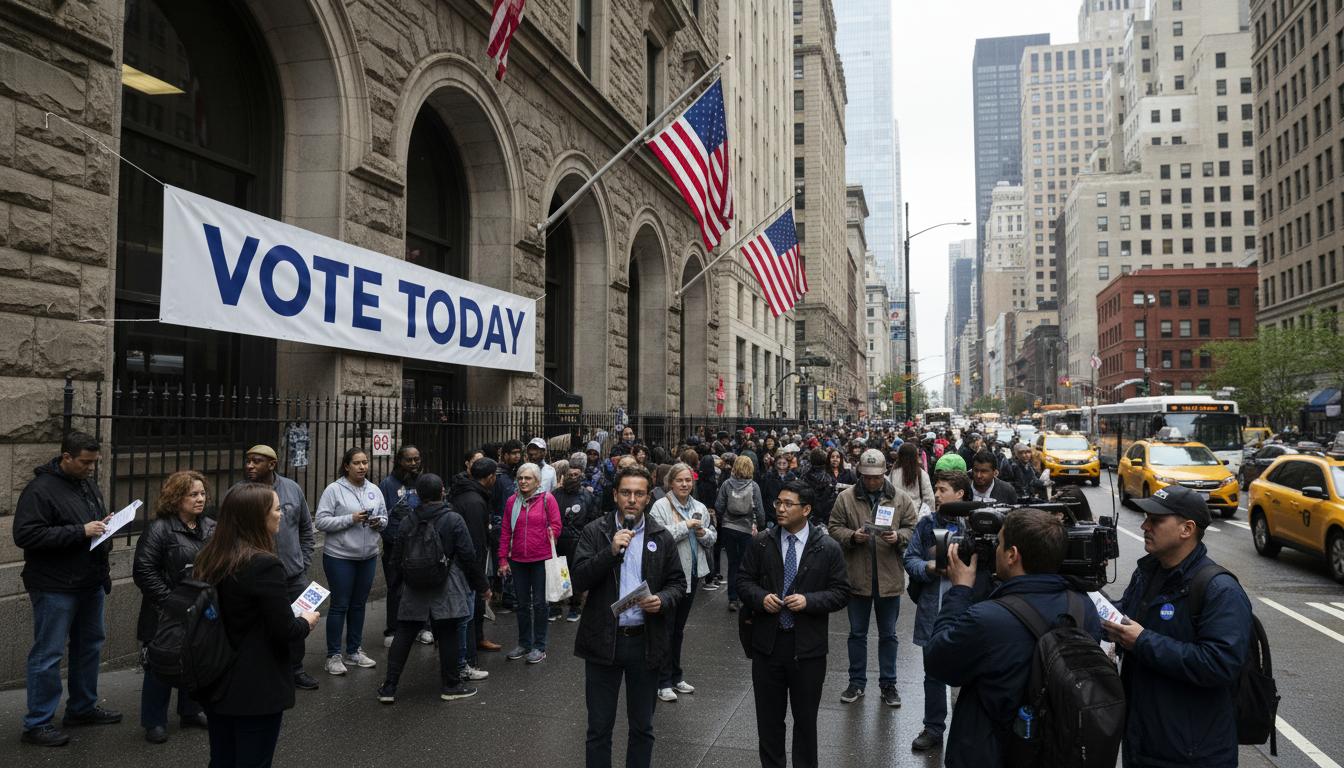
New York City feels close to home for many Canadians. A weekend from Toronto to Manhattan, a film crew hopping down from Vancouver to shoot in Brooklyn, a Montreal founder pitching investors in SoHo—our ties to the city are constant. That’s why the NYC mayoral election is worth understanding from a Canadian perspective. It’s not just a big-city political story; it’s a change in policy climate for tourism, trade, culture, security, and the cross-border economy we all share.
This guide walks you through how the New York City mayor race works, what powers the mayor really has, why ranked-choice voting now shapes the outcome, and how the results can ripple into Canadian lives and businesses. You’ll see practical examples, side-by-side comparisons with Canadian cities, and tips for following the campaign without getting lost in the noise. We’ll keep the tone plainspoken, the facts precise, and the focus on what you can actually use.
If you’ve ever Googled “nyc mayoral election” and wondered where to begin, start here. You’ll get a clear picture of the rules, the timeline, the money, and the issues—plus what’s different this time compared with the last big New York City mayoral race, and how it all connects to life north of the border.
Why the NYC mayoral election matters in Canada
There’s a practical reason Canadians track this race: New York City policy choices don’t stay in New York. They show up in airline schedules, hotel prices, policing footprints around major tourist sites, film permits, climate projects, and procurement notices that Canadian firms can bid on. They can influence the feel of a trip, the cost of doing business, and the tempo of cultural exchange. The person in City Hall helps set those choices.
Consider tourism first. Millions of Canadians visit New York each year, often on short, spontaneous trips. Mayoral stances on public safety, cleanliness, street vending rules, nightlife enforcement, and major events affect whether a weekend in Manhattan feels seamless or chaotic. A tough line on unlicensed short-term rentals can tighten the hotel market and nudge prices up. A push for more pedestrianized streets can make Midtown strollable for families in a way it wasn’t in years past. Small shifts add up, and that’s before you factor in currency exchange moving the price of Broadway tickets and a hotel occupancy tax layered on top of New York’s 8.875% sales tax.
Then there’s business and the creative economy. Toronto and Vancouver are hubs for film and TV, but crews and talent constantly shuttle to New York. Mayoral priorities on permits, union coordination, and neighborhood impact rules can speed shoots up or slow them down. Tech firms in Waterloo and Montreal, meanwhile, watch what New York does on AI sandboxes, civic tech, and open data. When a mayor tells agencies to modernize procurement or cut red tape for startups, Canadian teams often notice—and sometimes win contracts.
Finally, we share a geography of risk. New York City is a coastal metropolis that spends serious money on climate adaptation—seawalls, stormwater systems, and resilient parks. Vancouver and Halifax understand that world instinctively. When New York greenlights a big flood-protection project or reshapes curb space for electric delivery fleets, it becomes a playbook other North American cities read. The new mayor’s budget moves can change the scale and speed of that work.
What the NYC mayor actually does
It’s easy to think of the mayor as a mascot. In New York, the job is closer to a premier running a sprawling provincial government. City agencies deliver policing, sanitation, social services, parks, and much more. The mayor proposes a massive annual budget, negotiates with labour, and appoints agency heads, from policing to education. The office isn’t omnipotent—New York State controls big levers like the transit authority and much tax law—but it’s the most powerful municipal job in the United States.
Education alone is a full-time endeavor. New York City’s public schools are under a structure commonly called “mayoral control.” The mayor appoints the schools chancellor and holds significant sway over the Panel for Educational Policy. That power is renewed periodically by the state legislature, which means the mayor must also be a negotiator in Albany. When you hear about universal pre-K, class-size rules, or curriculum priorities, you’re hearing a City Hall story too.
Budget-setting is the other engine. The mayor drafts a preliminary and then an executive budget before hammering out a final plan with the City Council. Through that process, priorities become real. More shelter funding or fewer library hours? More sanitation pickups or fresh bike lanes? The final numbers decide.
How the NYC mayoral election works
Election cycle and calendar
New York City holds its mayoral election every four years in odd-numbered years: 2001, 2005, 2009, 2013, 2017, 2021, 2025, and so on. The most intense phase almost always starts with the Democratic primary, since Democrats dominate citywide voter registration. But the general election in November still matters: contests can tighten in low-turnout years or when voters are restless.
The basic calendar looks like this in a modern cycle:
- Winter to spring: Candidates officially file, fundraising heats up, and ballot petitioning begins.
- Late spring to early summer: Primary debates and heavy campaigning.
- June: Party primaries. In New York City, these primaries for mayor use ranked-choice voting.
- July to October: General election campaigning, endorsements, and independent expenditures ramp up.
- November: General election day.
Early voting runs for a set window before both the primary and the general. New York’s rules for absentee and early mail voting can change, so the safest practice is to check the NYC Board of Elections (BOE) close to the date. If you’re a Canadian living in the city on a work permit, note that you cannot vote in the NYC mayoral election; it is restricted to eligible U.S. citizens who meet residency and registration requirements.
Parties, primaries, and independents
Most candidates seek a party nomination—usually Democratic or Republican, though minor parties sometimes field candidates. Party nominees are chosen in primaries administered by the BOE. Independents and smaller-party hopefuls can also petition to get on the November ballot without running in a primary; they must meet signature thresholds set by state law.
New York’s party infrastructure matters. Endorsements from local clubs, borough leaders, unions, and editorial boards can move votes, money, and volunteers. But it’s not monolithic. A charismatic candidate with strong small-dollar fundraising can surprise insiders, especially under ranked-choice voting when second- and third-choice support matters.
Ranked-choice voting in NYC primaries and special elections
Starting in 2021, New York City adopted ranked-choice voting (RCV) for primaries and special elections for city offices, including mayor. Voters can rank up to five candidates in order of preference. If someone wins more than 50% of first-choice votes, that’s it. If not, the last-place candidate is eliminated and those ballots roll to the next ranked candidate. The process repeats until someone crosses 50%.
RCV rewards coalition-building and civility. Candidates need to be liked by their base and acceptable to their rivals’ supporters. In practice, it means you’ll sometimes see joint campaigning—two candidates asking voters to rank them first and second in either order. It also changes how to read polls: first-choice tallies don’t tell the whole story if a front-runner has weak second-choice support.
The general election remains simple plurality
The November mayoral election is still a single-choice ballot with the winner being the highest vote-getter. That means the strategies that work in June don’t fully carry into the fall. Candidates recalibrate for broader audiences and turnout dynamics change.
Who runs NYC elections?
The Board of Elections in the City of New York administers voting. It’s a county-based structure established by state law, and it’s famously bureaucratic. Expect rigid deadlines, detailed rules, and occasionally clunky operations. The upside: it publishes a lot of data and follows court-tested procedures. For official answers—where to vote, how to request an absentee ballot, whether your registration is current—the BOE is the final word.
Voter eligibility and registration basics
Only U.S. citizens who are at least 18 years old by election day and meet residency requirements may vote in the NYC mayoral election. New York requires registration by a set deadline before the primary and general. Same-day registration is not broadly available for these elections; plan ahead. Noncitizen municipal voting has been proposed and litigated in New York City, but as of now it is not in effect. Always verify current rules with official sources, because election law can shift between cycles.
The issues that decide a New York City mayor race
Every nyc mayoral election rides on a handful of core questions: Can I afford to live here? Will my street feel safe? How fast will I get to work? Who’s looking out for kids, newcomers, and the most vulnerable? Candidates answer those questions in different ways, but the themes repeat—and they resonate with Canadians who face similar debates at home.
Housing, rent, and homelessness
Housing is the gravitational force. New York’s vacancy rates are tight and construction costs are high, so supply moves slowly. The mayor shapes zoning and planning through the Department of City Planning and the City Planning Commission, proposing rezonings, density bonuses near transit, and conversions of underused office space into housing. The City Council ultimately votes, and the state controls big rules like rent stabilization, but City Hall drives the agenda and the negotiating energy.
On rent and eviction policy, the city funds legal assistance and rental vouchers, and enforces housing codes through city agencies. New York’s “Right to Shelter” framework—rooted in a decades-old consent decree—shapes how the city provides shelter for homeless individuals and families. A mayor can’t change that unilaterally, but they can influence capacity, standards, and the balance between traditional shelters and hotel conversions. For Canadians, the clearest crossover is that New York is testing ideas your city may consider next: turning empty downtown offices into apartments, or allowing more “gentle density” on blocks that have been frozen for decades.
Practical lens: If the next mayor accelerates rezonings and approves more by-right conversions, developers may move faster and neighborhoods change quicker. That can affect where tourists stay, where restaurants open, and where Canadian retail brands launch U.S. flagships. If the mayor tightens enforcement on illegal short-term rentals, expect hotels to be tighter and pricier around holidays—something you’ll feel when booking in CAD.
Public safety and policing
Crime and public order are perennial drivers in a New York City mayoral race. The NYPD is enormous by Canadian standards, and the mayor appoints the police commissioner. Strategies vary—from precision policing and targeted enforcement to expanded crisis-response teams for mental health calls. Oversight matters, too: the Civilian Complaint Review Board, internal affairs, and court rulings all shape outcomes on the street.
Transit safety, illegal mopeds, quality-of-life rules for street vending, and enforcement around Times Square and major transit hubs can make or break a trip experience for visitors. A mayor who prioritizes visible cleanliness, predictable rules, and coordinated street management will brand the city as more welcoming. Conversely, a focus on reducing low-level enforcement can shift the street vibe in ways that residents may support, but tourists need time to understand.
Transit, streets, and congestion pricing
New York’s subway and commuter rails are run by the state-controlled Metropolitan Transportation Authority (MTA), but the mayor still holds substantial sway: appointing city representatives to the MTA board, coordinating street-level bus lanes and bike networks, and supporting the funding deals that keep trains running. On the streets, the Department of Transportation (DOT) is squarely a city agency. That means the mayor directly shapes bus-priority corridors, pedestrian zones, protected bike lanes, curbside loading, and speed cameras near schools.
What about congestion pricing—the plan to toll vehicles entering Manhattan’s central business district? The state designs and approves it, and as of mid-2020s politics it’s been subject to starts and stops. The mayor’s support or opposition, however, influences timelines and the details that matter to drivers, taxis, delivery companies, and visitors. If and when tolling begins, Canadians who rent cars or drive down the I-87 will want to know how charges apply, what exemptions exist, and whether taxis or ride-hails tack on a surcharge to trips south of 60th Street. Even if you never drive in, congestion pricing revenue is intended to modernize subways and buses—good news for anyone heading to a matinee on a rainy Saturday.
For comparison: Toronto and Montreal rely heavily on provincial coordination for transit funding and expansion. So does New York with Albany. The politics feel familiar—split jurisdiction, hard math, and loud riders.
Immigration, asylum, and social services
New York City has long identified as a sanctuary city and a landing pad for newcomers. In recent years, large numbers of asylum seekers have arrived, testing shelter capacity, legal aid systems, and school placements. The mayor doesn’t set federal immigration policy, but can expand or contract city programs that cushion the landing—language access, housing vouchers, case management, and integration support. Canadians see similar debates in Toronto and Montreal, especially around shelter access and coordination with provincial and federal governments.
One legal note for readers abroad: noncitizens cannot vote in the NYC mayoral election under current rules. There has been legal wrangling over whether permanent residents and other lawfully present immigrants might be enfranchised for local contests, but those measures are not in effect. Civic engagement for noncitizens is still robust—community boards, parent councils, public hearings—but the ballot remains limited to eligible U.S. citizens.
Climate, resilience, and public space
Coastal storms, heat waves, and flooding are not abstractions in New York. The mayor steers billions into sea-level defenses, green infrastructure, tree canopy expansion, and cool roofs. Streets policy also doubles as climate policy: more bus lanes and bike lanes mean lower emissions and faster trips. Parks and waterfront projects, from Brooklyn Bridge Park to the East Side Coastal Resiliency work, can anchor neighborhoods and draw visitors for a sunset stroll.
Canadians will recognize the engineering mind-set. Think of Vancouver’s seawall, Halifax’s surge planning, or Toronto’s Port Lands flood protection. When New York solves something big—like how to build resilient schoolyards that double as stormwater sponges—you’ll often see the idea migrate north, tweaked for local law and budgets.
Budget, taxes, and business climate
New York City’s tax mix is different from Canadian cities. In addition to property tax, there are city income taxes, business taxes, and a high combined sales tax of 8.875%. There’s also a distinct hotel room occupancy tax, which matters if you’re booking a Midtown stay in peak season. The mayor’s budget allocates huge sums to sanitation, policing, education, shelters, libraries, and cultural institutions, with trade-offs that locals feel immediately.
For Canadian entrepreneurs, procurement rules and economic development programs are the bridge into this world. A mayor might expand minority- and women-owned business enterprise (M/WBE) targets, streamline vendor certification, or launch green-tech purchasing that Canadian cleantech firms can bid into. Currency swings add or subtract margin; so do local wage rules. For reference, New York City’s minimum wage is scheduled to reach $17 in 2026 under state law, with future indexing. If your team is staffing up for a New York contract, budget accordingly.
Education and childcare
Universal pre-kindergarten (pre-K) was a signature New York policy innovation, and expansions into 3-K changed family economics across the city. A mayor can scale programs up or down, adjust eligibility, and steer funding to community-based providers. Class-size mandates, school safety, and after-school programs can also move under a new administration. For Canadian families who relocate to the city on work assignments, these choices shape daily life quickly.
Ranked-choice voting in practice: what Canadians should know
Ranked-choice voting exploded onto the New York scene in 2021 when the city used it citywide for the first time in the mayoral primary. The mechanics are simple, but the politics mutate. Coalitions matter more than ever. Candidates who can be everyone’s second choice often outlive flashier rivals who polarize the field.
For voters, RCV invites honest ranking. If your top pick underperforms, your ballot doesn’t die; it slides to your next pick. Exhausted ballots still happen—when you run out of rankings because all your choices have been eliminated—but they’re a fraction of the total. Critically, the winner still needs a majority in the final round, not a mere plurality.
Why this matters for Canadians following the nyc mayoral election from afar: polls become trickier to read. A candidate with a clear first-choice lead can still lose if most other voters rank rivals second. Conversely, a coalition-builder who sits in second place in the first round can surge as lower-ranked candidates drop out. If you track the race, look for pollsters who simulate RCV rounds or at least ask about second and third choices.
Money in the NYC mayoral election: small dollars, big rules
The Campaign Finance Board and matching funds
New York City’s Campaign Finance Board (CFB) is the referee for money in city elections. It runs a public matching funds program designed to boost small-dollar donations from city residents. In plain language: donate a modest amount to a qualifying candidate and the city adds matching funds, multiplying the impact of neighbourhood contributions. To get the match, candidates must meet strict thresholds for the number and amount of local donations and then accept spending caps and disclosure rules.
The point isn’t theoretical. Matching funds reshape the campaign map by making door-to-door outreach and small events worth the time. Candidates can spend more energy courting ordinary voters and less time chasing maxed-out cheques. The flip side: paperwork. The CFB audits campaigns aggressively and can levy fines for sloppy compliance. If you’ve followed municipal races in Toronto—where corporate and union donations are banned and individuals face contribution caps—you’ll recognize the spirit. New York just adds money to the small end rather than only shrinking the big end.
Independent expenditures and outside groups
Independent spenders—committees and groups that operate outside campaigns—are legal at the municipal level in New York, subject to disclosure and “no coordination” rules. They can buy ads, send mailers, and gin up turnout. Their presence has grown in recent cycles and will likely keep growing. If you’re trying to parse a message barrage, look at disclaimers and CFB filings to see who paid for it.
Can Canadians donate or volunteer in a New York City race?
Be careful. U.S. federal law prohibits foreign nationals—non-U.S. citizens who are not lawful permanent residents—from making contributions, donations, or expenditures in connection with any U.S. election, including the NYC mayoral election. That prohibition covers money, in-kind support, and anything of value. It’s broad. If you’re a Canadian without a U.S. green card, do not donate. Do not buy ads. Do not reimburse anyone for political spending. Even volunteering can raise legal questions if it substitutes for paid services or involves money. When in doubt, sit it out—or get legal advice before you wade in.
If you’re a dual citizen or a lawful permanent resident living in New York, you can participate under the same rules as any other eligible resident, including giving within contribution limits and, if you’re a U.S. citizen, voting. Always confirm current limits and eligibility with official sources.
Debates and voter guides
The CFB doesn’t just police money; it also helps voters decide. The Board runs official debates for candidates who meet criteria and publishes a comprehensive Voter Guide, mailed to households and posted online. For Canadians trying to keep up from afar, the Guide is a clean, low-spin summary of who’s running and what they’re promising. It’s also where you learn about ballot measures that can accompany the mayor’s race.
Timeline and how to follow the next NYC mayor race
Every cycle has its quirks, but some rhythms repeat. If you want a compact roadmap to track the nyc mayoral election without living on social media, this will help.
Key dates and milestones
| Period | What to watch | Why it matters |
|---|---|---|
| January–March (Election Year) | Candidate filings, fundraising totals, endorsements start | Signals viability and who can build a citywide coalition |
| April–May | Petitioning, first debates, ad buys begin | Ballot access gets settled; narratives form |
| June | Primary election with ranked-choice voting | Usually decides the Democratic nominee—and often the mayor |
| July–October | General election, independent expenditures, more debates | Broader electorate, different turnout profile |
| November | General election day | Final outcome; transition begins |
How to read NYC polls without getting misled
Two quick rules. First, in primaries using ranked-choice voting, first-choice numbers don’t settle the question. Look for polls that publish second- and third-choice preferences and simulate elimination rounds. Second, pay attention to sample source. A landline-heavy poll in New York will miss large swaths of the electorate. Reputable outlets combine cell, online, and text—and they’ll publish their weighting.
Also keep an eye on late momentum. New Yorkers make decisions close to the primary, and RCV encourages “pairing” appeals that can move votes in the final week. If you’re comparing to Canadian municipal polls, treat them as cousins, not twins. The dynamics in a five-borough, multi-million voter primary are unique.
Trustworthy sources to bookmark
- NYC Board of Elections: official rules, deadlines, and results.
- NYC Campaign Finance Board: filings, debates, and the Voter Guide.
- Major local outlets: The City (nonprofit newsroom), Gothamist, NY1, and the big papers’ metro desks.
- City Hall and NYC Council press releases: for primary-source policy plans.
- NYC Open Data and the Independent Budget Office: for numbers you can verify.
Practical implications for Canadian visitors and businesses
Travel experience: safety, cleanliness, and events
Mayoral direction shows up at street level. A push for more sanitation pickups and targeted enforcement around tourist corridors can make Times Square, the High Line, and DUMBO feel polished during peak seasons. Conversely, if budgets tighten, you’ll notice fuller trash baskets and fewer staff at city-run cultural sites. For big gatherings—New Year’s Eve, Pride, the Marathon—the mayor’s tone shapes crowd management and transit coordination. If you’re traveling with kids or older relatives, those details are make-or-break.
Transit and getting around
Expect steady investment in bus-priority lanes and bike infrastructure, regardless of the mayor’s party label; the debate is usually pace, not direction. If congestion pricing launches during the next term, drivers will pay to enter Manhattan’s core at most times of day. Ride-hail trips could carry a surcharge. Subways will likely get the biggest boost from new funding. Canadians who routinely rent cars in New Jersey to drive into Manhattan might rethink that habit—Transit + walking will save money and stress.
Costs: taxes, tipping, and currency
Beyond the 8.875% sales tax, hotels in New York add a separate occupancy tax and a small per-night fee. Broadway tickets, museum admissions, and meals stack up faster when the loonie is soft against the U.S. dollar. If a mayor scales back short-term rentals and the hotel market tightens, expect prices to skew higher near major holidays. To blunt the sting, look to outer-borough stays—Long Island City in Queens, Downtown Brooklyn—or book earlier. Tipping norms (20% on table service) haven’t softened. Budget with that in mind.
Business climate: procurement and partnerships
Canadian firms can win New York City contracts in tech, design, climate resilience, and healthcare IT. The mayor’s procurement reforms—digitizing vendor registration, accelerating payments, easing rules for pilot projects—can make the market more approachable. Keep an eye on M/WBE goals and whether joint ventures are encouraged; partnering with a certified local firm is often the smoother path. If you sell hardware, check “Buy America” provisions and city-specific standards early. Delivery rules and curb space pilots may affect your logistics plans in Manhattan and Brooklyn.
Air links, preclearance, and NEXUS
Canada–New York air links are dense: Toronto–LaGuardia and Pearson–JFK runs are business shuttles, with Montreal and Vancouver connections close behind. Canadian preclearance at major airports remains a gift—Customs before you board simplifies arrival at LaGuardia or JFK. The mayor doesn’t control CBP or airline schedules, but a pro-tourism posture and city marketing dollars can nudge carriers to add seats after downturns. If you have NEXUS, keep it current; it won’t speed you through New York subways, but it makes the airport half of your trip much easier.
Legal differences to remember
New York enforces open-container alcohol laws more consistently than many Canadian cities. Cannabis is legal in both jurisdictions but regulated differently; don’t assume your Canadian purchase is legal to possess in New York. Fire codes, sidewalk café rules, and noise ordinances differ too. If your business activates a pop-up or event, work with local partners who navigate permits daily. The mayor’s stance on enforcement will affect how strictly those rules bite.
Comparing NYC’s system with Canadian municipal elections
Mayor’s powers
New York’s mayor is structurally stronger than most Canadian mayors, even after Ontario’s recent “strong mayor” model. The NYC mayor appoints agency heads across public safety, sanitation, housing, education, and transportation, and proposes the city budget. Toronto’s strong-mayor powers are broader today than in the past, but the machinery of service delivery sits in a different place. Vancouver’s at-large council structure and provincial oversight make for a different political rhythm. Montreal’s agglomeration and borough system adds another layer. In New York, five powerful borough presidents and 51 City Council members balance the mayor, but the executive still runs most day-to-day operations.
Electoral systems: FPTP vs. ranked-choice
Most Canadian municipal elections use first-past-the-post. Toronto experimented with ranked ballots at the idea stage, but Ontario banned municipalities from using them in 2020. British Columbia and Quebec municipalities largely stick to FPTP too. New York City, by contrast, uses ranked-choice voting in primaries and special elections, changing who wins and how campaigns behave. If you want a live laboratory of RCV at North American scale, New York is it.
Campaign finance
Canada leans heavily on contribution caps and bans on corporate/union donations for municipal races, aiming to keep money small and transparent. New York’s model adds public matching funds to amplify small-dollar gifts from residents, while still requiring strict disclosure. Both systems try to dampen outsized influence. The details are different; the intent rhymes.
How to fact-check claims during a New York City mayor race
Start with primary sources
When a candidate cites a statistic, look for the underlying dataset. Crime? NYPD CompStat releases weekly precinct-level numbers. Transit performance? The MTA publishes on-time rates, headways, and ridership. Budget claims? The Independent Budget Office and the Mayor’s Office of Management and Budget publish clear tables. Housing production? The Department of City Planning and HPD release permits and completions. The city’s Open Data portal can answer more than you’d suspect with a quick search.
Context is king
Two traps snare casual readers. First, comparing raw totals instead of rates—e.g., “more crimes” with a larger population or a bigger tourist surge isn’t the same as a higher per-capita rate. Second, ignoring inflation and seasonality; a budget cut in nominal dollars can be a bigger cut in real terms. Ask: per capita or absolute? Nominal or real? Seasonal spikes or trend?
Beware of social media shortcuts
Clipped videos and graphics travel fast, strip nuance, and sometimes cross into fabrication. If a viral post looks perfect for your priors, slow down. Reputable NYC outlets usually follow up within hours with fuller context. The CFB’s Voter Guide also forces candidates to write down positions in a space that can be compared side by side, without the adrenaline of a campaign rally.
Case study: lessons from the 2021 NYC mayoral election
New York’s 2021 race offers a tidy primer on how modern mayoral politics works. It was the first citywide primary to use ranked-choice voting. The Democratic field was large and ideologically diverse, with candidates pulling from labour, tech, progressive, and outer-borough coalitions. Early leads shifted as lower-ranked candidates were eliminated. In the end, a candidate emphasizing public safety and a centrist approach to governance prevailed after the RCV rounds, while rivals who were strong with specific blocs struggled to build second-choice bridges. Administrative hiccups—like the Board of Elections’ accidental inclusion of test ballots in a preliminary report—generated headlines, but the count was corrected and certified under scrutiny.
Takeaway for Canadians: in an RCV environment, the quiet work of coalition-building often beats the loudest rally. That truth has parallels across municipal politics in both countries, even under different election rules.
For Canadians living and working in New York City
Civic participation without crossing legal lines
If you’re a Canadian on a work permit or student visa in New York, you can’t vote in the nyc mayoral election and you shouldn’t donate to campaigns. But you aren’t shut out of civic life. You can testify at City Council hearings, join a community board as a public member depending on local rules, participate in school and park advisory groups, file 311 service requests, and meet your Council member or borough president to press hyperlocal issues. None of that violates election law; it’s normal city life.
Tax and residency basics
Spending substantial time in the U.S. can trigger tax residency thresholds; that’s beyond the mayor’s jurisdiction but very much within your life. Keep records. If you are relocating a team, factor in city and state income taxes, sales tax on equipment, and wage floors. New York’s labor market and regulatory expectations differ from Canadian provinces. Budget time for permits and compliance; the payoff is a very large market that rewards persistence and detail.
Schools, childcare, and daily logistics
If you move with family, study the Department of Education’s school choice timelines early. Spots for pre-K and 3-K can be competitive, and after-school slots go fast. The mayor’s priorities can affect seat counts, program hours, and eligibility, but the paperwork remains your job. If you’ll commute daily, live near a frequent subway line or a Select Bus Service route—your stress will fall dramatically.
Actionable tips for following the NYC mayoral election from Canada
- Skim the official Voter Guide once it drops. It’s concise and cuts through spin.
- Track one or two reputable local outlets. You don’t need the firehose; you need signal.
- When reading polls, ask how they handle ranked-choice voting and who they sampled.
- For travel planning, watch for City Hall announcements on street closures, major events, and sanitation or safety initiatives around peak seasons.
- If you do business with New York, sign up for procurement alerts and M/WBE updates. Reforms often arrive by memo before they hit headlines.
Frequently asked questions
When is the next NYC mayoral election?
New York City holds its mayoral election every four years in November of an odd-numbered year, with party primaries in June of the same year. Early voting occurs before both contests. Always confirm exact dates with the NYC Board of Elections; calendars can shift slightly.
How does ranked-choice voting work in NYC?
In primaries and special elections for city offices, you can rank up to five candidates. If no one gets a majority of first-choice votes, the last-place candidate is eliminated and those ballots move to the next ranked choice. The process repeats until someone crosses 50%. The general election in November remains a single-choice, highest-vote-wins contest.
Who can vote in the NYC mayoral election?
Only U.S. citizens aged 18 or older who meet New York residency and registration requirements may vote. Noncitizen voting in city elections has been proposed and litigated, but it is not in effect. Check the NYC Board of Elections for the latest rules.
Can a Canadian citizen donate to a New York City mayoral candidate?
No. U.S. law prohibits foreign nationals who are not lawful permanent residents from making contributions, donations, or expenditures in connection with U.S. elections, including the nyc mayoral election. Do not donate or fund political ads. If you hold dual U.S.–Canadian citizenship or have a U.S. green card, you may be eligible to donate within limits; verify before acting.
Does the NYC mayor control the subways?
Not directly. The state-run Metropolitan Transportation Authority oversees subways and many commuter rails. The mayor appoints some board members and can influence funding and street-level projects like bus lanes, but Albany makes many final calls. The mayor does control the city’s streets program and can prioritize bus and bike infrastructure.
Will congestion pricing affect Canadian visitors?
If tolling of Manhattan’s central business district is active during your trip and you drive or take a taxi/ride-hail below 60th Street, yes—expect a charge or surcharge. Transit riders won’t pay the road toll, but may benefit from improved service funded by the program. The exact rates and exemptions are set by state authorities; confirm close to your travel date.
How powerful is the NYC mayor compared with a Canadian mayor?
Very. The NYC mayor runs a huge municipal apparatus and appoints leaders across major agencies, including the schools chancellor and police commissioner, and proposes the city budget. Canadian mayors generally have less executive control, though Ontario’s strong-mayor powers narrow that gap somewhat in specific policy areas.
Where can I find trustworthy information on candidates and ballot measures?
Start with the NYC Campaign Finance Board’s Voter Guide and official debate program. Then cross-check with reputable local outlets. For data, use NYC Open Data, the Independent Budget Office, the NYPD’s CompStat, and the MTA’s performance dashboards.
Do NYC primaries usually decide the mayor?
Often, yes—especially the Democratic primary, given the city’s partisan balance. But general elections still count. Turnout, independent campaigns, and local issues can tighten a race, and surprises happen.
What’s one quick way this election could affect my next trip?
Hotel availability and street experience. A mayor’s approach to short-term rentals can tighten or loosen the hotel market. And choices on sanitation, street management, and event planning shape how welcoming the city feels when you arrive with luggage and a dinner reservation.