
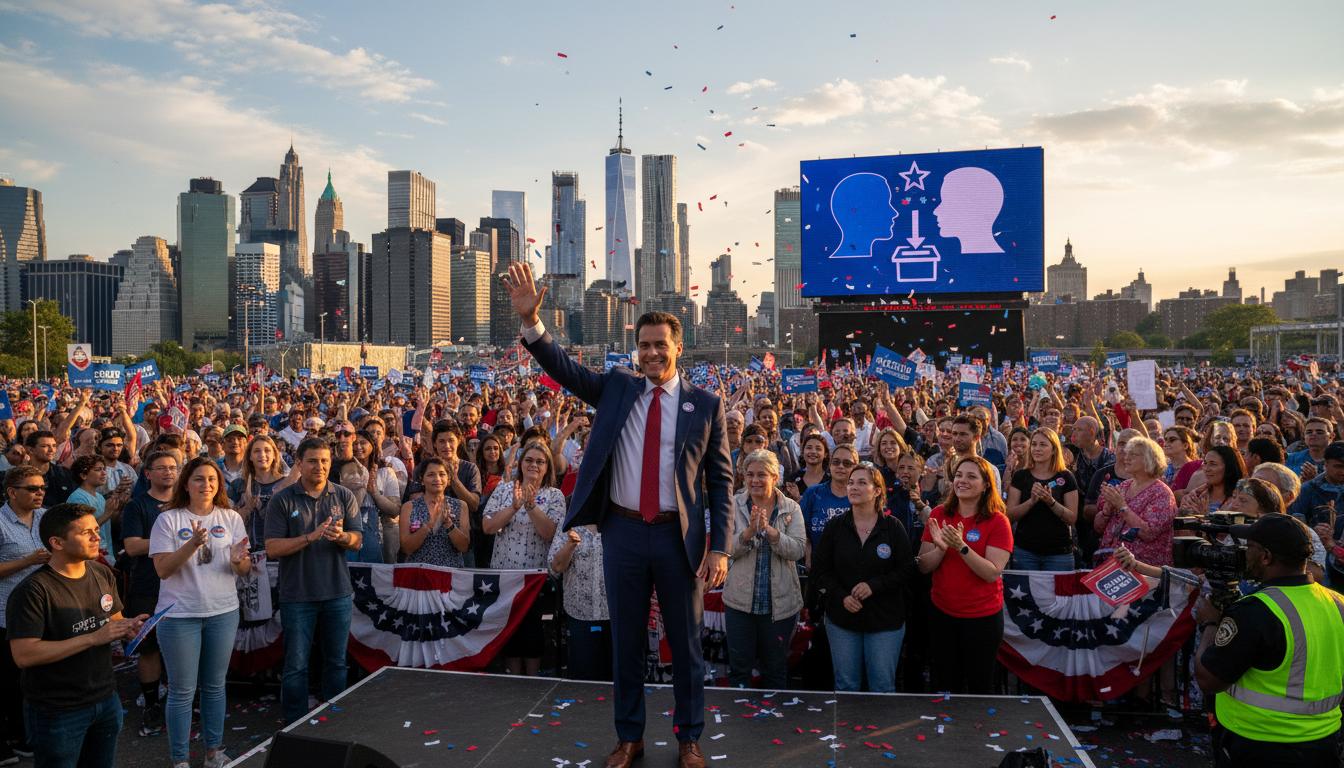
New York City’s mayor sits atop a municipal machine bigger than most provinces. The new york mayoral election doesn’t just set the tone for Gotham’s politics; it nudges markets, tourism, climate policy, policing approaches, and even how North American cities talk about housing and transit. If you work for a Canadian firm with clients in Manhattan, send students to internships in Brooklyn, ship goods down the I‑87, or you’re simply curious about how the largest city in the United States picks its leader, it pays to understand this race from the ground up.
This guide breaks down how the New York City mayoral election actually works, what ranked-choice voting means in practice, how money flows through the system, and which policy debates matter well beyond the Hudson. Along the way, you’ll see clear comparisons to Toronto, Vancouver, Montreal, and Canadian election rules—so the moving parts feel familiar without losing the nuances that make New York, well, New York.
Why the New York City mayoral race matters—especially to Canadians
New York City’s economy rivals entire countries. Decisions made at City Hall ripple across banking, media, arts, tech, real estate, and logistics. If the mayor champions congestion pricing, trucking and tourism from Quebec and Ontario feel it. If the administration shifts its approach on policing or public space, it reshapes visitor confidence and retail streetscapes Canadians recognize from weekend trips. If zoning rules open more housing, it influences urban reformers in Toronto and Vancouver who are already pushing gentle density.
There’s also the rhythm of North American politics. The NYC mayor is one of the best-known politicians on the continent. Journalists follow every budget line and police reform. Philanthropy and venture capital take cues. That attention can accelerate policies that Canadian cities are debating right now—from accessory dwelling units (ADUs) to e-bike infrastructure to immigrant services. It’s not that New York dictates what Canada does, but the city’s choices set a benchmark (and sometimes a warning) for what’s possible and how fast it can happen.
The office: what the NYC mayor can and cannot do
New York has a “strong mayor” system. The mayor runs a vast executive branch that includes the NYPD, sanitation, parks, housing development agencies, social services, and emergency management. The mayor proposes the city budget, negotiates with unions, appoints commissioners, and directs day-to-day operations affecting 8.5 million residents. Compared with most Canadian cities—where provincial governments can dramatically rewire municipal powers overnight—New York’s home-rule charter gives the mayor a durable legal backbone, though not absolute control.
Limits matter. The state controls key levers: the Metropolitan Transportation Authority (MTA) that runs subways and commuter rails is a state entity, not a city department; the governor and legislature heavily shape criminal justice policy and housing law; and revenue tools beyond property taxes and some fees are constrained by Albany. The mayor is a power broker with a loud megaphone, but some marquee issues (like congestion pricing implementation) turn on state decisions, appointments, and litigation timelines.
Election basics: timeline, terms, and who’s on the ballot
When is the next New York mayoral election?
New York City elects its mayor every four years. The next citywide cycle is in 2025. Primaries for party nominations are typically held in late June, early voting runs for several days before each election, and the general election takes place in early November (the first Tuesday after the first Monday). In Canada we’re used to fixed municipal dates by province; NYC’s calendar is steady but the primaries—where most of the action happens in such a Democratic-leaning city—come when Canadian schools are closing for summer, not in autumn.
Who can vote?
To vote in the new york mayoral election, you must be a U.S. citizen, at least 18 years old by election day, and a resident of New York City. You also need to be registered to vote. If you want to participate in a party primary (where the nominee is chosen), you must be enrolled in that party by the applicable deadline. Voters with prior felony convictions can vote once they’re out of incarceration; rights are restored upon release under current state law. People in jail for misdemeanors can vote, and so can those on probation or parole.
Canadians living in New York on work permits or green cards cannot currently vote in municipal elections. New York City passed a local law to let certain noncitizen residents vote in city races, but state courts blocked it. As of 2024, only U.S. citizens may vote in NYC municipal elections. If you’re a Canadian with U.S. citizenship or dual citizenship and you live in the city, you’re eligible—subject to the normal registration and enrollment rules.
How do you vote?
New York offers several options: in-person voting on election day, early voting at designated sites before election day, and mail options administered under state law (absentee or early mail voting). The rules around mail voting have been updated in recent years and occasionally litigated, so the safest advice is simple: check the New York City Board of Elections (vote.nyc) a few months before each election and again as deadlines approach. That site posts your polling place, early voting locations, ballot language, and all cutoff dates in one place.
Primaries and special elections for city offices use ranked-choice voting (RCV). The general election in November remains a traditional single-choice, first-past-the-post race. This split system shapes both campaign strategy and voter behavior, which we’ll unpack next.
Ranked-choice voting in New York City primaries: how it works and how it changes campaigns
The short version, without jargon
In the Democratic and Republican primaries (and in special elections) for the new york mayoral election and other city offices, New Yorkers can rank up to five candidates in order of preference. If your top choice doesn’t have enough support, your vote isn’t wasted; it can transfer to your next ranked candidate. Counting goes in rounds until a candidate crosses 50% of the active ballots or only two candidates remain. The point is to ensure the nominee has broader support than a simple plurality might reflect.
If you’ve followed leadership contests in Canada that use instant runoffs, you’ve seen the principle. The ranking itself is easy: pick 1, 2, 3, 4, 5. The complexity shows up later, when campaigns try to be everyone’s second choice and the media explains transfers after election night.
A quick step-by-step tally example
- Round 1: Count all first-choice votes. If someone has more than 50%, done.
- If not, eliminate the last-place candidate. Move those ballots to the next ranked candidate still in the race.
- Recount. If a candidate passes 50%, stop. If not, eliminate the new last place and transfer again.
- Repeat until there’s a majority winner among active ballots.
“Active” matters. If a ballot runs out of rankings (maybe the voter only marked a first choice, or all of their ranked candidates are eliminated), it becomes “exhausted” and no longer counts in later rounds. That’s why ranking sincerely—rather than “bullet voting” for one person only—can help your preferences carry farther.
Strategy and myths, explained plainly
- Bullet voting rarely helps. If your favorite is eliminated and you didn’t rank anyone else, you’ve lost influence in the final choice. Ranking backups doesn’t hurt your first choice. It just gives your ballot a second life if needed.
- Endorsement swaps matter. Candidates sometimes ask supporters to rank them 1 and an ally 2. In 2021, late-round preferences were decisive in the NYC mayoral race.
- Polling is trickier. A poll showing 25% for a candidate might hide strong second-choice appeal for someone at 18%. Watch for polls that ask about rankings, not just first picks.
- Patience is required. Official RCV tabulation takes time, especially with late-arriving valid mail ballots. Initial “first-choice” snapshots can be misleading.
Recent history: what 2021 taught voters and campaigns
A crowded field, a new system, and a close finish
The 2021 NYC mayoral election was the first big test of ranked-choice voting in city primaries. The Democratic field was large and lively: a former police captain and borough president, a civil rights lawyer, a former sanitation commissioner, a tech entrepreneur, and others. After multiple tabulation rounds in the primary, Eric Adams won the nomination with a narrow final margin, then captured the general election in November.
Two takeaways jumped out. First, coalition-building mattered. Being a plausible second choice kept candidates alive deeper into the count. Second, administration matters. The Board of Elections mistakenly included a training dataset in an early, unofficial release of results, temporarily sowing confusion. The issue was caught and corrected, but it underscored the need for careful, transparent updates during RCV counts.
For Canadians used to clean single-night counts in municipal races, the 2021 experience was a reminder: New York’s process is thorough, but don’t expect a tidy headline by midnight when a primary is close and thousands of valid mail ballots remain.
What’s different heading into 2025
As the 2025 cycle approaches, the city’s agenda looks different from 2021. Public safety remains central, but the conversation has shifted from “pandemic recovery” to long-term staffing, technology in policing, and accountability. The housing crisis has sharpened, with vacancy rates for affordable homes painfully low and rents hitting records. The administration pushed citywide zoning text changes under a “City of Yes” banner to spur more housing, small business flexibility, and green retrofits; the City Council’s responses will shape how much new supply actually gets built.
Transit and congestion pricing are now political wildcards. The policy’s promise—less traffic, cleaner air, and billions for the MTA—collides with concerns about costs for outer-borough workers and a pause announced at the state level. Candidates will be pressed on how to fund the subway’s capital needs if tolls stall, and how to keep buses moving regardless of Albany’s posture.
New arrivals also define the moment. The city has accommodated large numbers of asylum seekers; shelter and service costs have become central to budget negotiations. Canadians will recognize the strain: big cities across our provinces are juggling federal-provincial responsibilities that play out on municipal streets. In New York, the mayor doesn’t control the border or refugee policy but must manage immediate housing, schooling, and public health demands.
The rules of the game: agencies, money, and mechanics
The New York City Board of Elections (BOE)
The BOE administers elections: registering voters, staffing poll sites, printing and scanning ballots, certifying results. It’s a city agency created by state law with a bipartisan structure. Voters can find personalized information—poll sites, sample ballots, deadlines—at vote.nyc. When you hear about slow counts or scanner issues, this is the shop under the microscope.
The NYC Campaign Finance Board (CFB) and public matching funds
Here’s where New York stands out. The CFB runs one of the most robust public financing systems in North America. Candidates who opt in agree to contribution limits and strong disclosure. In return, small-dollar donations from city residents are matched with public funds at a high multiple. For the 2021 cycle, a resident’s $10 contribution to a mayoral candidate could draw up to $80 in public funds under the most generous option. That made neighborhood fundraising more powerful than a handful of big checks.
The CFB also hosts debates, publishes voter guides, and acts as an aggressive referee on campaign finance compliance. If you’re used to Ontario’s rebate program or Quebec’s reimbursement rules, think of NYC’s system as more muscular: it’s designed not just to refund donors, but to change who gets to be competitive in the first place.
Rules can be tweaked between cycles—match ratios, caps, and spending limits shift by local law. If you’re donating, consulting, or even volunteering, read the current guidance on nyccfb.info so you don’t trip over technicalities, like “doing business” caps for contributors with city contracts or restrictions on corporate and LLC money. And remember: independent expenditures (so-called super PACs) operate under separate rules, disclosing their spending but barred from coordinating with campaigns.
Ballot access, petitions, and the alphabet soup of offices
Getting on the primary ballot for the new york mayoral election takes legwork. Candidates file designating petitions with thousands of valid signatures from enrolled party voters. Independent candidates for the general election file their own sets of signatures. It’s a ritual with real stakes: campaigns organize petition teams early in the year, and rivals often challenge signatures in court, combing for mismatches and errors.
When you follow the race, you’ll also hear about other citywide offices that share the ballot: the comptroller (the city’s chief financial officer and auditor) and the public advocate (an ombudsman-like post with a bully pulpit). Borough presidents, district attorneys (on a different cycle), City Council members, and judges appear in various years. Each office shapes the mayor’s world—especially the City Council, which passes laws, negotiates the budget, and can override mayoral vetoes with a two-thirds vote.
Issues that will dominate the NYC mayoral election—and why they matter in Canada
Public safety and policing
New York’s crime trends are scrutinized more than perhaps any other city’s. Even modest shifts can dominate headlines and feed national narratives. The mayor appoints the NYPD commissioner and sets enforcement priorities. Debates typically revolve around gun violence strategies, neighborhood policing, mental health responses, accountability for misconduct, and quality-of-life enforcement (subway fare evasion, public disorder, street vending rules).
Canadian travelers and businesses feel this through perception—conference planners weigh attendee comfort—and through policy. For example, an emphasis on transit safety can spur targeted deployments that make tourists more confident using the subway. Conversely, a scandal or backsliding can spook casual visitors. Compare this to Toronto’s recurring debate over the TTC and police presence, or Vancouver’s shifts in downtown enforcement and outreach; the themes rhyme, but New York’s scale and media glare make small changes look seismic.
Housing, zoning, and the “City of Yes” push
New York’s housing shortage drives up rents, squeezes students and newcomers, and strains the workforce feeding its service and innovation economy. The mayor influences supply through land-use policy, budgeted subsidies, and agency leadership. Under the “City of Yes” proposals, the administration has sought to allow more homes near transit, enable accessory units, modernize parking requirements, and simplify conversions of underused commercial space. The City Council and community boards then weigh in through the ULURP process (Uniform Land Use Review Procedure) that governs rezonings.
Canada’s parallels are striking. Toronto has legalized multiplexes citywide and relaxed parking minimums; Vancouver pursues missing-middle reforms and tower concentration near stations; Montreal works through borough-specific plans. Provincial rules in Ontario (such as Bill 23) tilt the field, sometimes controversially, in favor of construction. New York’s mayor doesn’t have a provincial boss, but Albany still sets rent regulation frameworks and can enable or stall broader tools. For Canadians investing in real estate or sending graduates to the city, the outcome of zoning reforms will shape affordability and neighborhood character for years.
Transit, traffic, and congestion pricing
The MTA’s finances, service quality, and capital program often overshadow the mayoral conversation despite being under state control. Mayors shape the debate through appointments, advocacy, policing strategies, and bus-priority street design. Congestion pricing—charging vehicles that enter Manhattan’s central business district—was designed to cut gridlock and fund subway upgrades. It faced a political pause at the state level, lawsuits, and counterproposals to replace or supplement lost revenue.
Why should Canadians care? Drivers from Southern Ontario headed to Manhattan would pay the toll when implemented, while Quebec trucking companies running into Lower Manhattan would adjust delivery costs. More importantly, stable transit funding keeps the city attractive for business travel and tourism. Anyone who’s shepherded a delegation through a service meltdown knows how quickly meetings go sideways when the A train does too.
Climate resilience and big infrastructure
Sandy changed New York’s climate posture. The city invests in seawalls, elevated parks, drainage upgrades, and building retrofits under Local Law 97 (which mandates emissions cuts from large buildings). The mayor’s stance on resiliency—how aggressively to harden coastlines, how to balance flood control with waterfront access, how to finance green upgrades—shapes billions in contracts and the built environment for decades.
Canadian cities face many of the same choices. Montreal’s flood mitigation and Vancouver’s sea-level planning echo New York’s fights over berms and bulkheads. For firms in engineering, architecture, and clean-tech north of the border, a pro-infrastructure posture in the New York City mayoral race can translate into RFPs and partnerships, with standards and lessons that bleed back into Canadian practice.
Business climate, tech, media, and the creative economy
New York markets itself as a place where regulation is predictable and civic life is vibrant. Mayors influence film and TV permitting, public realm activations, nightlife enforcement, outdoor dining programs, and small business rules. A supportive City Hall can cut red tape for sidewalk cafes or streamline permits for studio expansions; a skeptical one can freeze pilots. If you work in Canadian production, you already bounce between Vancouver, Toronto, and New York; changes to location requirements, overtime enforcement, or public safety in key neighborhoods can swing decisions about where to shoot and hire.
Immigration, social services, and “sanctuary city” policies
New York’s identity as a sanctuary city means it limits cooperation with federal immigration enforcement in many circumstances. The mayor can lean into that identity or take a more cautious approach during budget stress. In recent years, the arrival of asylum seekers has tested shelter capacity and city finances. For Canadians, the policy questions are familiar: how to house newcomers quickly, how to coordinate multiple levels of government, and what the trade-offs look like for social service agencies on the ground. None of this is purely symbolic—providers in both countries share staff, training, and funding streams that benefit from policy predictability.
For Canadians living, studying, or doing business in NYC: what to watch
Can you vote? Usually no—unless you’re a U.S. citizen
Permanent residents and temporary workers cannot vote in the NYC mayoral election under current rules. Dual citizens can. If you do qualify, remember that the primary is often the decisive contest, and it uses ranked-choice voting. Register early. Party enrollment deadlines matter, and they can catch even locals off guard if left to the last minute.
Budget cycles and procurement: time your moves
NYC’s fiscal year starts July 1. The mayor releases a Preliminary Budget in January and an Executive Budget in the spring. The City Council negotiates changes, and an Adopted Budget is due by the end of June. For Canadian vendors and nonprofits, that means RFPs and contract amendments often bunch up in late spring and early summer. Election years add noise: agencies may grow cautious about launching new initiatives as political priorities shift, and big pilots might wait for a post-election greenlight.
Practical tip: Align proposals with existing, funded strategies (for example, emissions compliance under Local Law 97, or mental health initiatives that bridge policing and care). Administrations change slogans, not always the statutory obligations driving work.
Human resources and immigration planning
If you manage Canadians on TN, H‑1B, or O‑1 visas who rotate through New York assignments, track any mayoral initiative that affects staffing of city agencies, permitting cadences, or public safety patterns in your office neighborhood. A shift toward weekend street closures, for example, can complicate deliveries or crew calls. None of this determines federal immigration policy, but city operations shape lived experience—how your team commutes, eats, and navigates deadlines.
Media environment: fast, loud, and unforgiving
New York’s tabloids and local TV drive narratives in ways that might surprise Canadians raised on calmer city hall beats. Headlines are blunt. Leaks are common. Every mayor claims to cut through the noise—then learns to live with it. For Canadian organizations, that means two things: have clear spokespeople and relationships with local outlets, and don’t assume a nuanced pilot project will be reported with nuance on day one. Clarity is your friend.
How to follow the new york mayoral election without getting lost
Reading polls in an RCV world
Look for surveys that ask about second and third choices, not just the top line. See if pollsters weight by borough, race and ethnicity, age, education, and income; New York’s coalitions vary sharply by neighborhood. Beware of “likely voter” screens that don’t reflect New York’s low-turnout primaries. In 2021, many watchers underestimated late-ranking dynamics; don’t repeat that.
What election night looks like
On primary night, you’ll get unofficial first-choice tallies from in-person and some early votes. The BOE may run a preliminary ranked-choice simulation using the votes in hand, but final tabulation waits for all timely mail ballots. That can mean days or even a couple of weeks in the closest races. The general election is simpler—single-choice, immediate tallies—but even then, close margins demand patience.
Reliable sources and official updates
Bookmark vote.nyc for official notices and nyccfb.info for campaign finance, debate schedules, and voter guides. Local outlets with strong city hall coverage include The City (nonprofit newsroom), Gothamist/WNYC, Chalkbeat (for schools coverage), and the major dailies. National outlets will swoop in at key moments; they’re useful for context but sometimes miss neighborhood texture that decides primaries.
Comparing New York City and Canadian city elections
| Feature | New York City | Toronto | Vancouver | Montreal |
|---|---|---|---|---|
| Mayor’s powers | Strong mayor; appoints commissioners, proposes budget; state controls key areas | Historically moderate; “strong mayor” tools added by Ontario in recent years | Mayor-council; no “strong mayor” veto; province sets framework | Mayor leads executive committee; parties play large role; province (Quebec) sets rules |
| Election method | Primaries use ranked-choice voting; general is first-past-the-post | First-past-the-post; no RCV option currently allowed by province | At-large plurality (multiple councillors elected citywide); first-past-the-post | Party-based, first-past-the-post in districts |
| Term length | 4 years; 2 consecutive term limit for mayor | 4 years; no term limits | 4 years; no term limits | 4 years; no term limits |
| Campaign finance | Public matching funds dramatically multiply small donations; corporate/LLC money restricted; independent expenditures allowed | Individual donations only; rebate program; corporate/union donations banned | Individual donations only; spending caps; corporate/union donations banned | Individual donations; partial reimbursements; municipal parties fundraise |
| Ballot structure | Partisan primaries; general election in November | Nonpartisan municipal ballot; no primaries | Nonpartisan; party slates operate informally | Partisan municipal system with formal parties |
Practical tips and watch-outs for Canadian readers
- Don’t assume the general election decides things. In New York City, the Democratic primary in June often effectively picks the next mayor due to the city’s partisan balance.
- Ranked-choice voting changes messaging. If you’re working on issues advocacy, understand that candidates want to be second-choice friendly; coalition language beats scorched earth in primaries.
- Check the rules twice before donating. If you live in New York and qualify to donate, make sure you’re not considered “doing business” with the city, which triggers much lower limits. Out-of-city or foreign nationals are barred from donating.
- Build Albany into your scenarios. The mayor can champion transit, housing, or criminal justice reforms, but the governor and state legislature hold big keys. Expect cross-level bargaining.
- Be cautious with “instant” takes. Early results undercount mail votes and can flip narratives in close primaries. Plan communications accordingly.
Glossary: New York election and policy terms in plain English
- Ranked-choice voting (RCV): A system where voters rank candidates; votes transfer as low-performing candidates are eliminated until someone has a majority.
- Primary: An intra-party election to choose the nominee who will appear on the general election ballot. NYC’s primaries for mayor use RCV.
- General election: The November contest between party nominees (and independents). In NYC, it’s first-past-the-post.
- NYC Campaign Finance Board (CFB): Oversees public matching funds, enforces campaign finance rules, and runs voter education.
- Board of Elections (BOE): Administers voting—registration, polling places, ballots, and counts.
- ULURP: Uniform Land Use Review Procedure—a public review for major land-use changes.
- City of Yes: Branding for citywide zoning text changes aimed at housing, economic opportunity, and carbon neutrality.
- MTA: Metropolitan Transportation Authority—the state-run agency for subways, buses (some), and commuter rails.
- Public advocate: Citywide office that can investigate services and introduce bills but cannot vote on them.
- Comptroller: Citywide office that audits agencies and oversees city finances and pension funds.
Deep dive: how the budget intersects with the new york mayoral election
Budgets are moral documents, but they’re also calendars. A new mayor inherits commitments from the prior administration and a shortlist of immediate choices: restore cuts, continue pilots, or pivot. For firms in Canada selling services to New York—everything from cloud platforms to prefab housing—understanding budget seasons helps you pitch with realism.
January brings the Preliminary Budget, a temperature check that sets the tone. By April or May, the Executive Budget folds in updated revenues and policy changes. Negotiations with the City Council intensify, and agencies prepare their spending plans for the fiscal year starting July 1. Election cycles complicate this: a mayor running for re-election might front-load restorations or spotlight projects aligned with campaign themes, while challengers pick them apart with their own versions. After November, a second-term or newly elected mayor reshuffles priorities, and midyear budget modifications follow.
Canadian comparison: In Toronto, a strong-mayor toolkit now allows a mayor to push through budgets aligned with provincial priorities with a minority of council support. New York doesn’t work that way; the mayor and City Council must land a negotiated budget, and politics within the Council can swing outcomes. Translation: coalition-mapping is not optional.
Money and messaging: what the NYC campaign finance system means for influence
New York’s public matching funds are meant to diversify who runs and who donates. Instead of leaning on a few deep-pocketed donors, candidates criss-cross neighborhoods courting $10, $20, $50 contributions from city residents. Those small sums get matched by the city (subject to audits and strict caps). The effect? A PTA organizer in Queens has more leverage than you might expect, and retail politics matter in a mass-media town.
For Canadians used to individual-only donations and municipal rebates, three differences stand out:
- Magnitude: NYC’s match means a handful of small donors can unlock thousands in public funds, pushing viable campaigns earlier.
- Compliance culture: The CFB audits aggressively. Campaigns keep receipts, flag “doing business” contributors, and respond to inquiries with precision. A sloppy campaign can lose public funds.
- Independent expenditures: Outside groups can spend heavily if they disclose and don’t coordinate. They can shape narratives in late stages of a primary—even under RCV—by amplifying issues or attacking opponents.
If you’re advising a nonprofit or business that wants to educate voters on an issue during the new york mayoral election, talk to counsel before you spend a dime. The line between permissible issue advocacy and regulated electioneering is policed carefully, and missteps travel fast in New York’s media ecosystem.
The mechanics of voting: what happens from registration to certification
Registration and party enrollment
New York allows online, mail, and in-person voter registration. You can pre-register at 16 or 17; voting begins at 18. If you want to participate in a party primary, make sure your party enrollment is correctly recorded well before the primary. Historically, party changes needed to be made months in advance; laws have evolved, but the safest bet is to check your status early in the year on vote.nyc and fix anything long before the deadline.
Early voting and mail
Early voting typically runs for several days before each election, with limited hours and assigned sites. Lines are often shorter than election day, but sites may not be your usual neighborhood school. Mail voting options exist under state law, and requirements have changed in recent years; court challenges sometimes alter the landscape. Always consult the NYC BOE for the latest forms, deadlines, and eligibility.
Certification and recounts
After election day, the BOE canvasses affidavit ballots, verifies mail ballots, and, in primaries, runs the official ranked-choice tabulation. Close margins can trigger manual checks, and campaigns may file challenges. Certification follows once all legal and administrative steps are complete. In 2021, the spotlight on process was intense; since then, the BOE has refined communications to avoid confusion—though patience remains a virtue for watchers.
How the mayor’s agenda intersects with Albany and Washington
It’s tempting to treat the mayor as a city-state leader. In practice, the job is part city management, part constant negotiation. Need a new revenue source? Albany. Want to change how judges set bail? Albany. Looking to advance big transit projects? Albany and Washington for funding and approvals. The new york mayoral election sets a tone: does the city elect a collaborator, a brawler, a technocrat, a visionary? But the test begins after the victory party—how effectively can the winner align local coalitions and external power centers.
Canadian translation: think of a city leader who must work Ottawa and the province while delivering on snow clearance and building permits. The difference is scale and spotlight. New York’s mayor has the profile of a premier, the constraints of a municipal CEO, and a press corps that expects daily answers.
What Canadians should monitor month by month in an election year
January–March: footing and filings
Candidates finalize paperwork, launch fundraising pushes, and build petition operations to make the ballot. The mayor unveils the Preliminary Budget. Policy frames harden. If you’re mapping risk for your organization, identify which agencies your work touches and note their commissioners’ tenures and public comments on priorities.
April–June: petitions, policy stakes, and primary debates
Designating petitions get filed and challenged. Debates surface fault lines—public safety numbers, housing pipelines, business permitting pains. The Executive Budget lands. If you rely on city permits or grants, prepare a short, nonpartisan brief explaining how your work fits into existing legal mandates and performance metrics; you’ll use the same brief regardless of who wins.
June: primary voting window
Early voting begins, then election day. Expect late mail ballots and careful RCV tabulation. Communications teams should plan for multiple outcomes. If you’re Canadian media, be prepared to explain RCV clearly and avoid calling a race on round-one numbers.
July–November: between primary and general
The nominee consolidates support. Policy teams float transition memos. Agencies implement the Adopted Budget. For external partners, this is a good time to request meetings with career civil servants who manage programs over multiple administrations; they often stay when elected leaders change.
Post-election: transition and recalibration
Winners name key appointments. Stakeholders jostle for position. If you have contracts or MOUs, revisit timelines and deliverables; new commissioners may seek quick wins and fresh baselines. Keep your Canadian board or HQ informed about realistic ramp times—New York transitions are busy and public.
Case studies: how mayoral choices echo north of the border
Outdoor dining and public space pilots
New York’s pandemic-era outdoor dining exploded into a reimagining of streets. The program’s permanent form affects restaurants, suppliers, and neighborhood feel. Toronto and Montreal had their own curbside experiments; each city is still deciding how far to go. A mayor supportive of flexible, well-enforced outdoor dining can boost hospitality ties across the border—more menus printed at Ontario shops, more Canadian wine on New York patios, more cross-city best practices.
Office-to-residential conversions
Downtowns everywhere are wrestling with hybrid work. New York is pushing pilot programs and zoning tweaks to make conversions easier where buildings and floorplates allow it. Vancouver and Toronto are weighing similar moves, with seismic and heritage considerations layered on top. If conversions gain momentum in Manhattan, lenders and developers may be more open to Canadian deals, using New York as a proof point for difficult financing stacks.
Micromobility and street safety
How the mayor approaches e-bikes, delivery worker protections, and protected bike lanes will shape outcomes on both sides of the border. New York’s data-heavy, incremental buildouts offer lessons for cities like Calgary, Edmonton, and Ottawa trying to stitch networks under winter constraints. Conversely, a backlash could cool momentum elsewhere. Watch the details: insurance rules, speed governors, charging safety—these matter more to daily life than speeches.
Reading candidates’ platforms: a practical, nonpartisan checklist
- Budget math: Do the revenues match the promises? Are recurring costs paired with recurring funds?
- State strategy: How will the plan win needed changes in Albany? Who are the allies and what’s plan B?
- Delivery muscle: Which commissioner roles are named as levers? Are there timelines beyond “in the first 100 days”?
- Equity lens: How do proposals distribute benefits across boroughs, income levels, and racial groups? Are metrics public?
- Implementation risk: Are labor, procurement, and legal constraints acknowledged? Are pilots sized to prove or disprove assumptions?
Common misunderstandings, cleared up
- “Ranked-choice voting is confusing.” Filling out the ballot is simple. The complexity is in the count, which happens behind the scenes.
- “The mayor controls the subway.” The mayor influences, but the MTA is state-run. Funding and governance run through Albany.
- “New York’s mayor can’t get anything done without the state.” Plenty of big moves—budget reallocations, policing priorities, zoning text changes—live squarely within city powers.
- “Election night tells the whole story.” In close primaries under RCV, expect a wait. It’s about accuracy, not drama.
Action steps for Canadian organizations before, during, and after the election
Before
- Map dependencies: Which agencies, permits, and programs touch your work?
- Audit compliance: If you operate in NYC, ensure your contributions, lobbying filings, and contracting paperwork are clean.
- Brief your team: Explain ranked-choice voting and realistic result timelines to executives and clients.
During
- Monitor official channels: vote.nyc and nyccfb.info for rules; agency Twitter/press rooms for service changes.
- Scenario-plan communications: Have statements ready for delayed counts or contested narratives.
- Stay nonpartisan if you must: Many contracts require it; stick to operations and public information.
After
- Engage early: Congratulate winners, share concise policy memos, and offer pilots aligned with legal mandates.
- Expect churn: Commissioners and chiefs change; keep relationships with career staff warm.
- Measure twice: If the mayoral platform promised specific timelines, track actual budget lines and agency directives, not just press conferences.
FAQ: New York mayoral election
When is the next New York City mayoral election?
The next citywide election for mayor is in 2025. Party primaries are scheduled for late June, with early voting in the days prior. The general election takes place in early November.
Does New York City use ranked-choice voting?
Yes, in primaries and special elections for city offices (including the mayor). Voters can rank up to five candidates. The general election in November is not ranked; it uses a single-choice, first-past-the-post system.
Who is eligible to vote in the new york mayoral election?
U.S. citizens who are at least 18 years old by election day, live in New York City, and are properly registered may vote. Noncitizen voting in municipal elections is not in effect as of 2024 due to court rulings. Canadians living in NYC without U.S. citizenship cannot vote.
How do I register and find my polling place?
Visit vote.nyc to register, check your status, find deadlines, and look up your polling place and early voting site. You can register by mail, online (when available), or in person, subject to state law.
How fast are results reported under ranked-choice voting?
Unofficial first-choice results usually appear on primary night. Final ranked-choice tabulations wait on valid mail ballots and can take days or longer if margins are tight. The Board of Elections posts updated rounds as they run official counts.
Can 17-year-olds vote in the primary if they turn 18 later in the year?
You can pre-register at 16 or 17, but you must be 18 by election day to vote. Check vote.nyc for the most current rules and any special circumstances.
How is the NYC mayor’s power different from a Canadian mayor’s?
New York’s mayor runs a large executive branch with substantial appointment powers and proposes the city budget. However, the state controls big-ticket policies like the MTA and some criminal justice frameworks. In Canada, provincial governments can substantially reshape municipal powers; recent “strong mayor” tools in Ontario changed Toronto’s dynamics, but the legal and political ecosystems still differ.
What role does the NYC Campaign Finance Board play?
The CFB enforces campaign finance law, provides public matching funds for small-dollar donations, hosts official debates, and publishes a voter guide. It’s designed to increase transparency and reduce reliance on large donors.
How does the mayoral race affect Canadian businesses?
Policies on permitting, public safety, outdoor dining, film and TV, climate retrofits, and street design can change operating costs and opportunities. Transit funding stability affects travel plans and event logistics. For trucking and visitors, congestion pricing—if implemented—adds a toll to Manhattan entries but may improve traffic and air quality.
Where can I find authoritative information on the new york mayoral election?
Use vote.nyc for election administration (registration, polling places, deadlines) and nyccfb.info for campaign finance, matching funds, and voter guides. For coverage, local outlets like The City, Gothamist/WNYC, and major newspapers provide reliable context.
What should I watch for on housing policy during the campaign?
Look at candidates’ positions on the “City of Yes” zoning proposals, accessory dwelling units, parking minimums, office-to-residential conversions, and how they’ll work with the City Council and Albany to expand supply. Check for details on financing tools and timelines, not just slogans.
Do independents have a path in the NYC mayoral election?
In a city that leans heavily Democratic, the Democratic primary usually decides the winner. Independent runs do happen and can matter in specific contexts, but the structural path is steep citywide. The rules for ballot access require substantial signature-gathering and legal stamina.
Is there anything Canadians should do differently when following U.S. municipal elections?
Yes: expect a louder media environment, respect longer counting timelines for primaries, and keep state-level politics in frame. If you engage publicly as an organization, confirm that your communications comply with both U.S. and New York City rules around lobbying, contributions, and electioneering.
Final thought
The new york mayoral election is more than a local contest—it’s a window into how a global city adapts to housing scarcity, climate risk, and the future of work while navigating a layered governance system. For Canadians, watching closely isn’t voyeurism; it’s professional due diligence and civic curiosity. The choices New Yorkers make will shape how we move, build, and visit for years to come. Keep an eye on the calendar, read past the headlines, and, if you’re eligible, rank your ballot with confidence.