
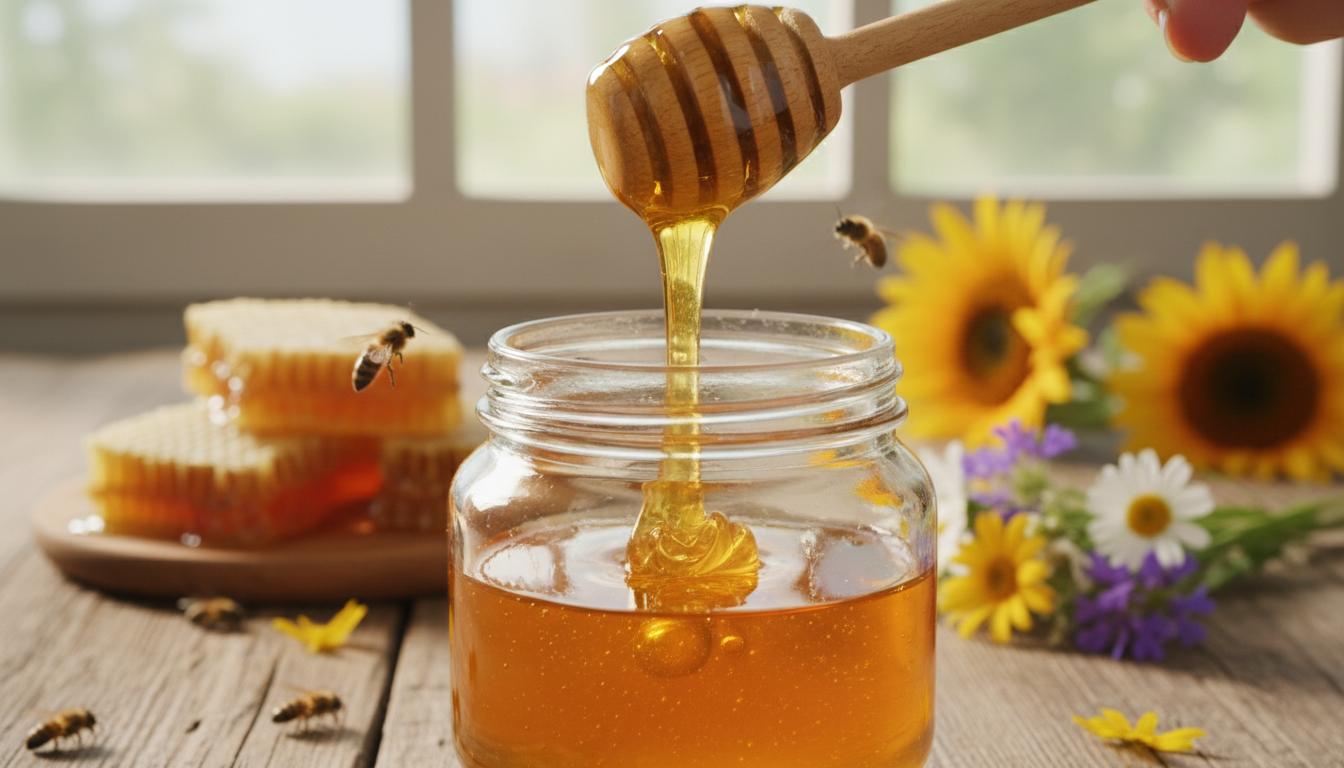
Crack open a jar of honey and you’re holding a tiny, edible biography of place and season. In Canada, that story might smell like clover from the Prairies, taste bold and malty like Quebec buckwheat, or carry the floral whisper of B.C. fireweed. Yet the sweet stuff isn’t just syrup with a halo. It’s chemistry, agriculture, regulation, craftsmanship, and a pantry workhorse all at once. If you’ve ever wondered which honey to buy, what “raw” really means, how to cook with it, or why your beautiful jar turned solid, this guide walks you through it—Canadian context, straight talk, and plenty of practical advice included.
You’ll learn how honey is made, the varieties you’ll see on shelves from Vancouver to Halifax, what labels and grades actually tell you, how to store it, and where honey fits into nutrition and health. We’ll also look at beekeeping and the environment here at home, demystify common myths, and share smart ways to use honey every day. Ready to dip the spoon?
What Honey Really Is (and What It Isn’t)
Honey is concentrated flower nectar. Honeybees collect nectar from blooms, add enzymes, and gently dry it down in the hive until it’s stable. The bees cap the finished product with wax. Humans come along, spin those frames in a centrifuge, and out comes liquid gold. That’s the short version.
On a molecular level, honey is mostly sugars—primarily fructose and glucose—with a dash of water (usually under 18%), traces of minerals (like potassium), organic acids, and a grab bag of aromatic compounds and antioxidants that change with the floral source. The mix is what gives clover honey its delicate taste and buckwheat its deep, molasses-like punch. Those subtle elements are why honey from one region can taste wildly different from another.
What honey isn’t: it’s not corn syrup, it’s not maple syrup, and it’s not a cure-all. It’s a naturally preserved carbohydrate food with flavour and function. It’s shelf-stable because of its low water activity and acidity. And while it’s been used in traditional medicine for ages, modern evidence supports specific uses, not miracle claims.
How Bees Turn Flowers Into Honey (Canadian Field Notes)
If you’ve driven past yellow canola fields in Alberta or wildflower meadows in Nova Scotia, you’ve seen the bees’ buffet. Worker bees sip nectar and carry it in their honey stomach, an extra “tank” where enzymes like invertase begin breaking down complex sugars. Back in the hive, that nectar is passed bee-to-bee, thickening as enzymes work. Then the bees fan their wings to evaporate water until the honey reaches a stable moisture level. They seal it with wax cappings, and that’s the bees’ winter pantry secured.
In the Canadian Prairies—Alberta, Saskatchewan, and Manitoba—dry summer air makes it easier for bees to produce honey with lower moisture. That’s one reason the Prairies dominate Canadian production. In British Columbia and parts of Ontario and Quebec, a mix of wildflowers, orchards, and forest blooms yield diverse, often nuanced honeys. Atlantic Canada adds blueberry and cranberry blossoms to the map. The short season and long winters shape beekeeping decisions everywhere: quick spring buildup, precise timing of honey supers (the boxes where honey is stored), and careful wintering.
Honey Varieties You’ll See in Canada
Finding “the best” honey is like choosing a favourite Canadian landscape—it depends on what you like. Understanding the main types helps you shop with more confidence and cook with more intention.
Monofloral vs. Wildflower
Monofloral (or varietal) honey comes mostly from one predominant nectar source. “Mostly” matters. Bees don’t sign exclusive contracts with clover or buckwheat; they forage where they find it. Beekeepers harvest at the right time and place hives where a single bloom dominates to get a distinctive profile. In Canada, common monoflorals include:
- Clover: Light, approachable, and classically “honey” in taste. Common across the Prairies.
- Canola (Rapeseed): Very pale, quick to crystallize; often used to make smooth creamed honey.
- Buckwheat: Dark, robust, malty; popular in Quebec and parts of Manitoba and Ontario.
- Blueberry: Floral-fruity notes; found in Atlantic Canada and some Ontario regions near blueberry fields.
- Fireweed: Delicate and aromatic; a West Coast favourite from B.C.’s forested areas after wildfire or logging clearings.
Wildflower is a blend of whatever blooms the bees worked in that area and season. No two wildflower batches are exactly the same. That variability is part of the charm, especially if you like tasting differences from spring to late summer, or comparing jars from, say, Vancouver Island versus the Annapolis Valley.
Forms: Liquid, Creamed, Comb, and Beyond
Liquid honey is simply extracted and strained. It may be raw (unpasteurized) or pasteurized (heated to kill yeast and delay crystallization). It’s easy to drizzle and measure.
Creamed honey—often called “whipped” or “spun”—is not whipped cream. It’s liquid honey that’s seeded with very fine crystals and held at cool temperatures so it sets into a smooth, spreadable texture. Canada is a creamed-honey-loving nation, and Prairie canola honey’s natural tendency to crystallize makes it perfect for the style.
Comb honey is edible honey still in the beeswax cells. You can chew it like a natural gum, slice it onto cheese boards, or mash it onto toast. It’s premium because making perfect comb takes time and skill and yields less extractable honey per hive.
Infused honey is honey steeped with things like chilies, ginger, or lavender. It’s tasty if you trust the source, but it’s no longer just honey under Canadian labelling standards—it’s a flavoured product, and that must show up on the label.
Raw vs. Pasteurized (and What “Unfiltered” Really Means)
Raw honey has not been pasteurized. It may be gently warmed to flow for bottling and strained to remove wax bits, but it’s not heat-treated to kill yeast. Raw honey usually looks cloudier and crystallizes sooner. Pasteurized honey is heated (temperatures vary) to reduce yeast and delay crystallization, making it clearer and slow to granulate on the shelf.
Unfiltered is a vague term. Most small producers strain honey through mesh to remove debris. Some large processors filter much more finely and may remove most pollen granules to achieve a very clear product. If pollen or “as natural as possible” appeals to you, look for raw and minimally strained from a local beekeeper.
A Quick Comparison of Popular Canadian Honeys
| Type | Typical Colour | Flavour Notes | Crystallization Speed | Canadian Regions Commonly Found | Best Uses |
|---|---|---|---|---|---|
| Clover | Light gold | Mild, vanilla-floral | Moderate | Prairies, Ontario | Tea, baking, everyday drizzle |
| Canola (Rapeseed) | Pale to almost white | Clean, neutral | Fast | Alberta, Saskatchewan, Manitoba | Creamed honey, spreads |
| Buckwheat | Dark amber to nearly black | Malty, earthy, molasses | Moderate | Quebec, Manitoba, Ontario | BBQ sauces, glazes, baking with spice |
| Blueberry | Light to medium amber | Fruity-floral, gentle tang | Moderate | Atlantic Canada, parts of Ontario | Yogurt, vinaigrettes, cocktails |
| Fireweed | Very light | Delicate, aromatic | Slow to moderate | British Columbia | Finishing cheeses, delicate desserts |
| Wildflower | Varies by season | Floral, complex, place-driven | Varies | Across Canada | All-purpose; taste and pair with local foods |
Reading Labels and Understanding Canadian Honey Rules
Labels can be murky. Here’s how to decode jars on a Canadian shelf—whether at a farmers’ market in Kelowna or a big-box store in Mississauga.
Basic Labelling Must-Haves
In Canada, honey sold at retail must carry a common name (usually “honey”), net quantity (metric), the responsible seller’s name and address, and country of origin. If it’s a blend of Canadian and imported honeys, that should be clear. Single-ingredient foods like pure honey are typically exempt from a Nutrition Facts table unless ingredients have been added. If the shelf life is 90 days or less (rare for honey), a best-before date is required. Most honey sold for home use has a very long shelf life and may not include a best-before date.
“Product of Canada” vs. “Made in Canada”
These phrases mean different things. “Product of Canada” generally signals that the ingredients and most of the processing are Canadian. “Made in Canada” can be used for foods made or processed in Canada, even if ingredients are imported, depending on the claim wording. If buying local matters to you, look for clear wording about origin and ask the seller if you’re unsure.
Grades, Colour, and Clarity
Canada has specific standards of identity for honey. You may see grade names or colour designations on some jars. Not every jar is graded—grading can be optional at retail—but if a grade appears, it must meet Canadian specifications regarding factors like moisture content, flavour, absence of defects, and colour class. Colour isn’t a quality score; it’s a style indicator. Dark doesn’t mean “worse” than light. It’s simply different nectar, different timing, and often a richer flavour profile.
Raw, Unpasteurized, and “Pure”
Raw or unpasteurized honey isn’t a regulated health claim; it’s a processing description. “Pure honey” should mean there’s no added sugar, flavour, or other ingredients. If a product includes added flavours (vanilla, chili, etc.), Canadian labelling expects that to be declared clearly in the common name and ingredients list.
Imported vs. Canadian Honey (and Adulteration Concerns)
Honey fraud—diluting with cheaper syrups or mislabelling origin—is a global issue. Canada’s food regulator monitors honey and has taken action when products don’t meet standards. No single home test can prove purity, but there are clues: a too-good-to-be-true price for a large bottle, extremely uniform taste batch after batch from a “wildflower” source, or vague origin information. Buying from a trusted Canadian beekeeper, a known local brand, or a retailer with strong quality controls is your safest bet.
Nutrition, Health, and Safety: What Science Actually Supports
Honey is delicious. It’s also sugar. Both are true. Use it smartly and it earns its place in your kitchen.
What’s in a Spoonful?
One tablespoon (15 mL) of honey provides roughly 60 calories, mostly from about 17 grams of sugars (a mix of fructose and glucose). You’ll find tiny amounts of minerals and polyphenols—compounds that contribute to flavour and antioxidant activity—but not at levels that transform honey into a multivitamin. Think of those extras as pleasant bonuses rather than primary nutrition.
Honey vs. Sugar: Does It Make a Difference?
Honey and white sugar both deliver sugars and energy. Honey often tastes sweeter than sugar because of its fructose content and aromatic compounds, so you may use a little less. It also brings moisture and browning to baked goods, plus distinctive flavours that plain sugar lacks. Glycemic index values vary by floral source but tend to land from the low 50s to mid-60s—moderate overall. If you manage blood sugar, treat honey with the same caution you’d give any sweetener and speak with a health professional about what fits your plan.
Raw Honey and Pasteurized Honey: Health Differences
Raw honey can contain more native enzymes and microscopic pollen compared to pasteurized honey. Whether that translates to measurable health benefits in everyday use is less clear. Choosing raw is reasonable if you enjoy the taste and texture and are comfortable with natural variation. Pasteurized honey is simply heated to improve clarity and shelf stability. Both are honey; pick based on preference and intended use.
Honey and Coughs
There’s research showing that a spoonful of honey before bed can help reduce the frequency and severity of nighttime coughing in children over one year old, and it may offer similar comfort for adults with sore throats. It’s not a cure, but it’s a time-honoured, evidence-backed soother for mild coughs. Always avoid giving honey to infants under 12 months old due to the risk of infant botulism.
Who Should Not Eat Honey?
Infants under one year should not consume honey—raw or pasteurized—because honey can contain spores of Clostridium botulinum. Older children and adults process spores safely in the gut. Pregnant and breastfeeding people can typically consume honey as an ordinary food; the infant restriction doesn’t apply to them, though anyone managing blood sugar should factor honey into their carbohydrate intake.
People with severe pollen allergies are unlikely to react to the tiny amount of pollen in most honey, but reactions are possible, especially with bee-related supplements like propolis or royal jelly. If you have a known allergy, proceed cautiously and consult a professional before trying new bee products.
Topical Use and “Medical-Grade” Honey
Clinicians sometimes use sterilized, medical-grade honey dressings (including specific types like manuka) for wound care. That’s a regulated medical product, not pantry honey. Don’t smear regular honey on cuts or burns; keep it for the toast and tea. If you’re curious about therapeutic uses, talk to a healthcare provider and look for products classified and sold as medical devices or licensed natural health products in Canada.
Storing Honey, Preventing Crystallization, and Reviving a Solid Jar
Honey doesn’t “go bad” in the usual sense. Properly stored, it can last practically indefinitely. What does change is texture. Most honeys crystallize over time—the glucose separates from water and forms crystals. That’s normal, not spoilage.
Smart Storage
Keep honey in a tightly sealed container at room temperature, away from direct sunlight and heat. A cupboard is better than a windowsill. Refrigeration speeds up crystallization. Freezing is safe if you bulk buy, but unnecessary for ordinary storage. Clean your spoon before dipping to avoid introducing moisture or crumbs that could cause fermentation in high-moisture honeys.
Why Some Honeys Crystallize Faster
Crystallization depends on the ratio of glucose to fructose, the presence of tiny particles (which act as “seeds”), and storage temperature. Canola and some clover honeys crystallize quickly; fireweed and certain wildflowers stay liquid longer. Cool temperatures—around 10–15°C—encourage crystals to form. Warmer rooms slow the process.
How to Liquefy Crystallized Honey (Gently!)
Set the jar in a bowl of warm water and stir occasionally until it loosens. Keep temperatures moderate; too much heat can alter colour and flavour. If your jar is plastic, transfer the honey to a heat-safe vessel first. Microwaves work in a pinch but are easy to overdo—short bursts with stirring are key if you go that route. For creamed honey, enjoy the spreadable texture as-is; reheating will undo that silky structure.
How to Buy Honey in Canada Without Guesswork
Staring at a wall of jars in a Calgary supermarket or an artisan display in Halifax can feel like decision overload. Use these practical filters:
Decide on Style First
Ask yourself: do you want a mild everyday drizzle (clover, wildflower), a punch of character (buckwheat), or a specialty (comb, creamed)? For baking, a lighter honey keeps flavours clean. For BBQ or roasted vegetables, darker honey brings depth.
Read for Origin and Processing
Look for clear origin statements. If a jar says “Blend of Canadian and foreign honey,” you know it’s not all domestic. Raw or unpasteurized will be called out if that’s the selling point. For the most vivid expression of terroir, buy single-origin jars from specific regions or farms.
Price Reality Check
Prices vary widely. As a rough guide, in many Canadian cities a 500 g jar of local, unpasteurized honey might run $10–$20, depending on the variety and producer. Specialty comb honey or rare varietals cost more. Deep discounts on large bottles may indicate imports, blends, or heavy processing. That isn’t automatically bad, but know what you’re buying.
Buy From Trustworthy Sources
Farmers’ markets, roadside farm stands, and community-supported agriculture boxes are excellent ways to meet beekeepers. Many Canadian beekeepers also sell online direct. Reputable grocery chains and co-ops often stock regional brands. If you care about traceability or sustainable practices, talk to the producer. They’ll tell you what’s blooming, how they manage hives, and whether they heat-filter or leave honey raw.
Cooking and Baking With Honey
Honey is more than sugar. It’s flavour, moisture, and browning in a single spoonful. Once you get comfortable using it, you’ll start reaching for honey on autopilot.
Sweetening Drinks and Everyday Uses
A drizzle of fireweed honey in green tea, buckwheat in a latte, clover in lemonade—change the variety and you change the whole drink. For cold beverages, dissolve honey first in a bit of warm water to avoid gritty bits settling at the bottom. Swirl honey into yogurt, ricotta, or oatmeal; spoon it over roasted fruit; or pair comb honey with soft cheeses. In summer, a blueberry-honey vinaigrette over greens with toasted walnuts hits the spot.
Baking Conversions That Actually Work
Honey is sweeter than sugar, so you need less. As a starting point for quick breads, muffins, and cakes:
- Replace 1 cup (200 g) of sugar with about 3/4 cup (250 mL) of liquid honey.
- Reduce other liquids in the recipe by about 1/4 cup (60 mL) per cup of honey used.
- Lower the oven temperature by roughly 14°C (25°F) to prevent over-browning.
- Add a pinch more baking soda (about 1/8 to 1/4 tsp per cup of honey) to balance acidity and help rise.
Expect a moister crumb and a slightly deeper colour. Lighter honeys suit delicate cakes; darker honeys shine in gingerbread, granola, and spice cookies.
Glazes, Marinades, and Savoury Dishes
Honey’s ability to caramelize is your best friend. For salmon or chicken, whisk together 2 parts honey, 1 part soy sauce, a splash of rice vinegar, and grated ginger. Brush and broil. On the grill, use honey near the end to reduce burning. Toss carrots or squash with olive oil, buckwheat honey, and chili flakes; roast until edges char. Drizzle clover honey on pizza with prosciutto and arugula for a sweet-salty finish.
Regional Pairings to Try
Pick a honey from your province and match it to a local ingredient. Fireweed with B.C. goat cheese. Clover with Alberta beef in a peppery glaze. Buckwheat with Quebec pork ribs in a maple-honey BBQ sauce. Blueberry honey in a Nova Scotia blueberry buckle. Ontario wildflower over late-summer peaches. You get the idea: let place meet place.
Ferments and Drinks: Mead, Shrubs, and Switchels
Mead—honey wine—has a quiet renaissance in Canada, with small meaderies crafting dry, sparkling, and fruit-infused styles. If you’re not fermenting at home, play with no-alcohol options: make a honey shrub by dissolving 1/2 cup honey in 1/2 cup hot water, cooling, then mixing with 1 cup apple cider vinegar and fruit; rest a day and mix with soda. Or try a classic switchel: honey, ginger, vinegar, and cold water over ice.
Starting (or Supporting) Beekeeping in Canada
Honey doesn’t appear out of thin air. Canadian beekeeping is a working partnership with a tough climate, agricultural cycles, and the bees themselves. Whether you’re curious about backyard hives or simply want to support pollinator health, here’s the lay of the land.
Registration and Rules
In Canada, beekeeping falls under provincial and territorial oversight. Most provinces require you to register hives, report locations, and follow rules designed to control pests and diseases. For example, provinces have laws addressing American foulbrood, varroa mites, and movement of colonies. Municipal bylaws can add urban-specific rules—setbacks from property lines, number of hives, and water provision. Before you buy gear, check your provincial agriculture ministry and your city’s bylaws to understand requirements where you live.
Costs, Gear, and Realistic Expectations
A basic setup—hive boxes, frames, protective clothing, smoker, tools—plus a nucleus colony (“nuc”) of bees can cost several hundred dollars to start. In colder provinces, you’ll need to budget for wintering supplies and potential losses. First-year honey yields can be modest; the bees need time to build. The true reward is learning bee biology and watching the seasons unfold through the hive.
Urban Beekeeping and Neighbours
Urban hives are increasingly common. Good neighbour etiquette matters: provide a clean water source so bees aren’t crowding a neighbour’s kiddie pool, manage swarming risk, and keep flight paths above head height by placing hives behind fences or shrubs. City bylaw compliance is key. Joining a local beekeeping association helps with mentorship and seasonal reminders (when to add supers, when to treat for mites, when to wrap for winter).
Pollination Services and Canadian Agriculture
Beyond honey, beekeepers provide pollination to crops like blueberries, canola, and apples. In spring, hives move into orchards and berry fields; later, they return to honey yards. This pollination economy is intertwined with food production. When you buy local honey, you’re also supporting the broader agricultural system that relies on managed pollinators.
Environmental and Ethical Considerations
It’s easy to romanticize honeybees, but a nuanced view helps you make better choices for biodiversity.
Honeybees and Native Pollinators
The European honeybee is a managed, domesticated species in Canada. It coexists with hundreds of native bees and other pollinators. Planting native flowers, reducing pesticide use, and providing habitat (undisturbed soil, woody stems, and water) support wild pollinators too. If you keep honeybees, manage them responsibly so they’re healthy and less likely to stress local ecosystems.
Pesticides and Bee Health
Canada’s pesticide oversight includes federal evaluation and provincial implementation. Over the past decade there’s been active debate and evolving measures related to pollinator health and certain pesticide classes. The big picture: integrated pest management, habitat, and disease control inside hives all affect bee health. As a consumer, you can support producers who prioritize best practices and diversify forage sources.
Is Organic Honey Realistic in Canada?
Organic certification for honey has strict rules, including forage radius requirements that are challenging in areas with mixed land use. That’s why you’ll see fewer certified-organic options compared to other foods. Organic labels do exist—often from remote regions or producers who meet certification standards—but lack of an organic stamp doesn’t mean lower quality. Ask how the bees are managed and what’s blooming around the hives.
Honey in the Canadian Marketplace
The honey you see on shelves reflects a supply chain of small farms, large packers, and imports. Understanding how it flows helps you buy wisely.
Local Jars vs. Blended Bottles
Small-batch honeys from local beekeepers offer character and transparency: you can taste the season and ask questions. Larger brands often blend honeys to achieve a consistent flavour and price point. Both have a place. If you like reliability for your morning tea, blends work well. If you enjoy exploring terroir (and supporting a nearby farm), pick up varietals and wildflower jars from your province.
Seasonality and Availability
Canada’s honey season peaks late summer. Many producers bottle throughout the fall and winter. Popular varietals or comb honey can sell out. If you find a jar you love, consider buying a second to carry you through the year. Properly stored, it’ll keep beautifully.
Gifts and Travel
Honey makes an easy, nonperishable gift. If you’re crossing borders, commercially packaged honey is often allowed for personal use, but rules change. Declare what you have and check current Canadian border guidance before traveling with honey or mailing it to friends abroad.
Common Myths, Debunked
Honey attracts folklore. Let’s separate fact from wishful thinking.
“Local Honey Cures Seasonal Allergies.”
Evidence is weak. Most hay fever comes from wind-pollinated plants (like grasses), not the bee-pollinated blossoms that contribute to honey. Some people report subjective relief, which could be due to honey soothing the throat or placebo effect. Enjoy local honey for taste and community support; treat allergy relief claims with skepticism.
“Honey Never Spoils, So Storage Doesn’t Matter.”
Honey is very stable, but it’s not indestructible. High moisture honey can ferment; heat can darken and change flavour. Keep it sealed and at room temperature to preserve quality as long as possible.
“Dark Honey Is Low Quality.”
Wrong. Dark honeys like buckwheat often contain more flavour compounds and can be spectacular in cooking. Colour reflects floral source and processing, not cleanliness or craftsmanship.
“Crystallized Honey Is Ruined.”
Crystallization is normal. The texture change doesn’t mean the honey’s gone off. Liquefy it gently if you prefer it runny, or use it as-is for spreads and baking.
“Manuka Is the Only ‘Healthy’ Honey.”
Manuka, produced in New Zealand from the Leptospermum shrub, has unique characteristics and is used in specific medical contexts when processed as a medical product. That doesn’t make other honeys unhealthy. Choose honey for taste and purpose, not just a buzzword.
Your Honey Pantry: Building a Small, Mighty Collection
A well-stocked Canadian pantry could include:
- One mild all-purpose honey (clover or a light wildflower) for sweetening drinks and light baking.
- One bold honey (buckwheat) for sauces, marinades, and robust baked goods.
- Creamed honey for toast and quick snacks.
- Comb honey for cheese boards and special breakfasts.
Label lids with the purchase date and variety. Rotate jars so older ones get used first. If you buy in bulk, decant into a smaller working jar and keep the rest sealed.
Quality, Testing, and What “Real” Honey Means
Curious minds ask: how do we know honey is “real”? At the industry level, there are sophisticated tools—like isotope analysis and nuclear magnetic resonance profiling—to detect adulteration. There’s also routine monitoring and inspection. At home, skip internet “tests” like the flame trick or the water swirl; they’re unreliable.
Real honey shows variation across seasons and regions. It may crystallize. It may be subtly cloudy if raw. It should smell and taste like something that once came from flowers, not a flat, sugary syrup. Trust your senses and your source.
Practical Troubleshooting
My Honey Fermented. Now What?
If you open a jar and smell yeasty or sour notes, or see bubbles, it’s likely fermenting—usually due to higher moisture content. It’s not dangerous in the way spoiled meat is, but most people don’t enjoy the flavour. Use it for cooking where a tangy note won’t ruin the dish, or compost it. To prevent repeats, buy from producers who harvest fully capped frames and store honey tightly sealed.
My Honey Is Gritty.
That’s crystallization. Warm it gently. For a persistently gritty jar, consider creamed honey next time if you prefer a smooth, spreadable texture without reheating.
My Honey Darkened in the Cupboard.
Time and warmth cause natural darkening and flavour shifts. It’s still safe. If you prefer lighter notes, store honey in a cooler cabinet and use lighter varietals sooner.
Canadian Examples You Can Taste
If you’re on a culinary road trip (or just browsing online), sample across regions to understand how landscape shapes flavour:
- British Columbia: Fireweed honey from interior forests; wildflower from Vancouver Island’s mixed blooms.
- Alberta and Saskatchewan: Creamed canola honey with a silky texture; light clover for everyday use.
- Manitoba: Buckwheat honeys with depth; prairie wildflower with late-summer character.
- Ontario: Orchard-adjacent wildflower with apple-blossom hints; specialty varietals near the Niagara region.
- Quebec: Robust buckwheat with a loyal fan base; boreal wildflower with conifer-kissed notes in some areas.
- Atlantic Canada: Blueberry honey with gentle fruit notes; coastal wildflower with seasonal shifts.
Set up a simple tasting at home: line up three honeys, add apple slices, plain yogurt, mild goat cheese, and toast points. Taste light to dark. You’ll quickly see why one jar doesn’t fit every job.
Safety at Home: Kids, Pets, and the Pantry
Keep honey away from infants under one year old. For everyone else in the household, honey is a normal food. Dogs can have tiny licks, but there’s no nutritional reason to offer it—especially for pets managing weight or diabetes. Wipe sticky spills promptly; honey’s hygroscopic nature draws moisture and can make countertops tacky fast.
Glossary of Useful Honey Terms
- Raw/Unpasteurized: Not heat-treated to pasteurization temperatures; may be gently warmed for bottling.
- Creamed: Controlled crystallization yielding a smooth, spreadable texture.
- Comb Honey: Honey in the original beeswax comb.
- Monofloral: Predominantly from one nectar source (e.g., clover, buckwheat).
- Wildflower/Polyfloral: Mixed sources from an area and season.
- Moisture Content: Percentage of water in honey; lower moisture helps prevent fermentation.
- Granulation/Crystallization: Natural solidification of honey sugars over time.
FAQs
Does honey expire?
Honey is naturally long-lasting. Stored at room temperature in a sealed container, it stays good for years. Flavour and colour can change slowly, and crystallization is normal. If it smells off or fermented, it’s best for cooking or composting rather than drizzling on toast.
Is raw honey better than pasteurized?
“Better” depends on what you want. Raw honey keeps more of its natural enzymes and pollen and often has a more vivid, varied flavour. Pasteurized honey is clearer and slower to crystallize. Both are real honey; choose based on taste and use.
Can people with diabetes eat honey?
Honey raises blood sugar and should be counted like any carbohydrate. Some people prefer its flavour and may use less than they would sugar. If you manage diabetes, consult a healthcare professional and monitor portions carefully.
Is honey vegan?
Most vegans avoid honey because it’s produced by bees. Some plant-based eaters include it. If you’re gifting, ask about preferences or choose maple syrup—an easy Canadian alternative.
Why did my honey crystallize, and how do I fix it?
Crystallization is a natural process tied to the honey’s sugar ratio and temperature. Warm the jar gently in a bowl of warm water and stir. Avoid overheating, which can change flavour.
Is Canadian honey regulated?
Yes. Canada has standards for what can be sold as honey, along with labelling and origin requirements. If a grade is claimed on the label, it must meet Canadian specifications. Regulators also monitor for adulteration.
Can I bring honey into Canada from abroad?
Commercially packaged honey is often allowed for personal use, but you must declare it, and rules can change. Check current Canadian border and food safety guidance before travel.
Is honey safe during pregnancy?
Yes, for most people. The infant restriction (no honey for under 12 months) doesn’t apply to pregnant or breastfeeding adults. As with any sweetener, keep portions reasonable, especially if managing blood sugar.
What’s the difference between “Product of Canada” and “Made in Canada” on honey?
“Product of Canada” typically indicates Canadian ingredients and processing. “Made in Canada” can mean processed here with domestic and/or imported ingredients, depending on the claim wording. Read labels closely if origin matters to you.
Is creamed honey whipped with dairy?
No. Creamed honey is pure honey with very fine crystals created under controlled conditions. It’s naturally spreadable, dairy-free, and wonderfully smooth.
How much honey should I use to replace sugar in baking?
Start by using about 3/4 cup honey for every 1 cup sugar, reduce other liquids by 1/4 cup per cup of honey, and lower the oven temperature by 14°C (25°F). Adjust to taste and texture.
Can I feed honey to my infant?
No. Never give honey to infants under one year due to the risk of infant botulism.
Final Spoonful
From prairie clover to coastal wildflower, honey in Canada is a mirror of landscape and weather, shaped by skilled hands and busy wings. Pick jars that tell a story you care about—origin, flavour, craftsmanship—and use them with confidence. Whether you’re drizzling fireweed over chèvre, stirring buckwheat into BBQ sauce, or setting out comb honey for a Sunday brunch, you’re not just sweetening; you’re adding character. That’s the quiet genius of honey: simple on the spoon, endlessly interesting in the details.